BERLIN |
Fri Jun 15, 2012 10:53am EDT
(Reuters) - Two decades after the fall
of the Berlin Wall, some eastern Germans are once again carrying round
images of Karl Marx - if only in their pockets.
The disappearance of communist former East Germany
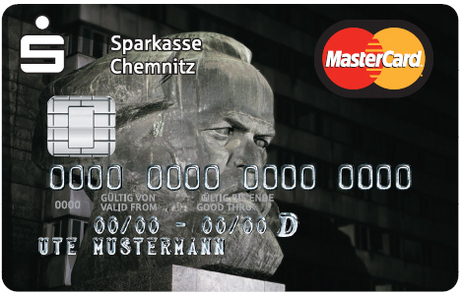
has not deterred them from using credit cards emblazoned with the image
of the man who foretold the end of capitalism and the triumph of
communism.
More than a third of
customers at Sparkasse bank in Chemnitz opted for the picture of a
bronze bust of the bearded 19th century German-born philosopher, bank
spokesman Roger Wirtz said.
Marx's stern face is depicted gazing towards the logo of Mastercard.
Before
the fall of the Berlin Wall, citizens of Chemnitz - then known as
Karl-Marx-Stadt - and the rest of East Germany would have seen Marx's
face on their 100-Mark banknotes.
Flattened
during World War Two, Chemnitz was rebuilt as a model socialist city
and still boasts a seven meter-tall bust of Marx in its center. The city
has been economically depressed since the end of communism and its
population has shrunk by 20 percent.
The
east has witnessed a wave of nostalgia in recent years for aspects of
the old East Germany, or DDR, where citizens had few freedoms but were
guaranteed jobs and social welfare. The trend is not limited to the
region.
"We've even received
inquiries from clients in western German states asking whether they
could open a local account with us to get a card bearing Marx's
features," Sparkasse's Wirtz told Reuters.
A
2008 survey found 52 percent of eastern Germans believed the free
market economy was "unsuitable" and 43 percent said they wanted
socialism back.
(Reporting by Sophie Duvernoy; Editing by Gareth Jones and Andrew Roche)

 Group Home
 Blog Home
 Group Blogs
 RSS