In the 70's, Argentina was used as a capitalist test model of neo-liberalization; we know the results and yet we can see many models being experimented with within our country and all over the world. California's University system was one of the best examples on how education can be available for everyone. From tradtiional students, eager to get a four year degree, a mature student unsure of his or her abilities exploring the avenues of education that they missed, often due to substandard schools, down to your grandmother who by taking a class in Tai Chi or badmintion stays active and healthy. You may have heard that's on the way out. Here's a great (but long) article outlining how this can be done, not only in California, but everywhere. If you get too depressed, just glance at the major points for a idea of the horrors occurring in our country:
Occupied Sonoma State University: No Billionaire Left Behind and the
sordid tale of the financialization and corporatization of one California State
University
Censored
Notebook Apr 22, 2012
http://www.facebook.com/sharer.php
Part I
Introduction
By Danny Weil
In the early
part of the 20th century the fertile valley of Sonoma county was the
former stomping grounds of author, Jack London and refuge for Jewish chicken
farmers fleeing Russia and Eastern Europe. Now beautiful Sonoma State
University sits at the foot of those majestic cascading mountains nestled in
the lap of bucolic wine country. The institute of higher learning is
seated on the far eastern edge of the city of Rohnert Park, just 50 or so miles
north of San Francisco. In the late winter and early spring, the morning
fog rolls in from the ocean and moves westward, draping the luscious green
landscape in an eerie cloak of steel-grey. White clouds hover mysteriously like
cotton balls high on top of gently rolling hills to the east while mallard
ducks and Canadian geese clothe the sky, making their noisy way through
generations of southern migration routes.
The campus is
pristine; it always has been. The topiary that makes up the campus is
lush with fantastic duck ponds, majestic meadow-like manicured lawns and
upscale residential villages complete with pools and hot tubs. Built like
a fortress, the walkways and various trails that mark the campus allow for a
contemplative, philosophical peripatetic meandering through cascading water
fountains and variegated old growth vegetation.
The history of
Sonoma State University (SSU) tells the remarkable story of one, tiny
California public state university and the corporatization and transformation
of this diminutive liberal arts college into a muscular mini-investment bank,
now $300 million dollars in debt and hovering on the precipice of bankruptcy.
Against the
backdrop of the stunning northern California hillside, it’s a grim tale of the
corporate colonization of a public college and is replete with a peek into the
‘life-styles’ of the New Gilded Age millionaires and billionaires who have
flocked to the public university with pockets of cash, looking to convert the
campus into their own private cultural grounds for music, fancy eatery and arts
center, complete with symphony orchestras. These rapacious captains of high
finance have unceremoniously tagged themselves as new-age philanthropists in an
epoch of cunning thievery and plunder. They now literally ‘occupy’ Sonoma State
University, turning the college and its culture into their own private hunting
grounds. Meanwhile, students wander around campus, ferreting out
accessible classes so they might graduate, wondering if they will ever find
work or be able to start a civic and family life or pay off staggering debts in
the form of student loans.
In this four part series, we will look
specifically at Sonoma State University (SSU or "the college”) one of the 23
state universities in the California State University system (CSU), the financialization
of the college, its corporatization and the dire consequences this all poses
for public education at the college and beyond. Most notably, we will
examine how the college and its governing structure have been compromised and
autocratically restructured in the interest of financialization and
corporatization. The article will examine how SSU has been quite
literally turned over to the exigencies of the private capital market and Wall
Street bond underwriters with reckless abandonment coupled with deleterious
effects for both those who work at the campus and for students who yearn to
receive an education.
It is also the
intent of this article to shed some light on the role of the new
uber-billionaires, in what can only be labeled the new ‘Gelded Age’ of public institutional castration; this to distinguish
our epoch in history from the Gilded Age
at the close of the 19th century and dawn of the early 20th
century — a time when industrial Robber Barons, like the financial Robber
Barons and buccaneers of today — roamed the national landscape like prehistoric
predators looking for profits and prey.
Placing the
campus under the critical lens of scrutiny will also allow for a full granular
examination of the role played by the campus coordinating class of publicly
salaried upper management who, working in tandem with the SSU president,
developed the corporate superstructure necessary for the increased
financialization of SSU. Furthermore, any suitable understanding of the
financialization of the college requires a copious comprehension of the unique
role played by capital construction projects at the campus and how they have
been fueled and subsidized by massive public debt managed by Wall Street banks
and brokerages.
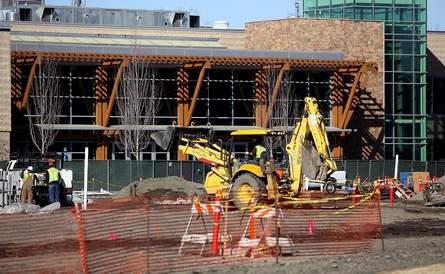
The backdrop: construction, construction and more
construction
Remarkably, in
face of the Great Financial Crisis of 2009 the current president of
Sonoma State University, Ruben Armiñana, continues to promote, finance and
muscle through the state bureaucracy literally hundreds of millions of dollars
for campus capital construction projects like there was no tomorrow (http://colleges.usnews.rankingsandreviews.com/best-colleges/sonoma-state-university-1156).
Indeed, the
capital construction projects over two decades have placed Sonoma State
University in the position of institutional debt peon. Meanwhile, fee increases imposed by the president on
current students and future students are rocketing through the roof with no end
in sight. As readers will discover, much like students who take out
costly loans to attend higher institutions of learning, it seems highly unlikely
that the SSU institutional debt can be serviced, let alone paid off. The
school is now in a briar’s patch of financial obligations that sees the
university struggling to get its hands on cash, sacrificing its educational
mission to serve students and faculty, while mortgaging its future to pay bond
holders. All of this spells a noxious brew of future obligations and
bursting financial bubbles.
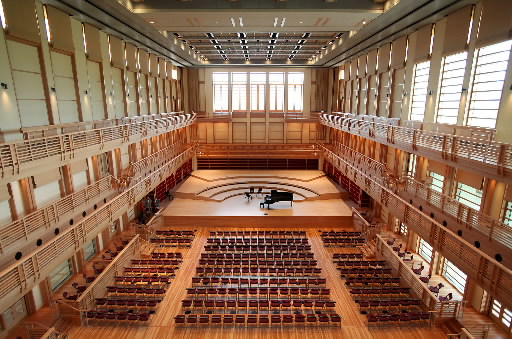
The Green
Music Center (GMC) and the Student Center are examples of two projects that are
scheduled to leave a debt stain of over $200 million in their wake, which will
then suck another annual $7 million off the top of SSU’s funding for the next
30 years. Add to this an additional $3 million that will be needed
annually to fund the GMC programming. At the apex of SSU’s monetary
problems is the GMC and represents a costly sinkhole. Once the Student
Center is online and added to the cost, SSU’s debt payments will have nearly
tripled since 2007 (ibid). Clearly, the cost of these two projects alone
is mindboggling.
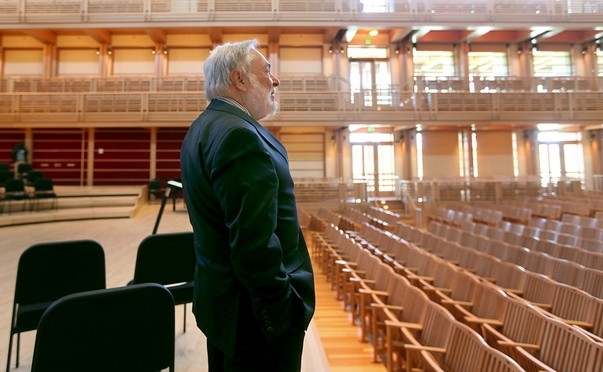
Ruben Armiñana
has dedicated his tenure not to the mission of higher public education, but to
an obsession for monuments manifesting in over one million square feet of
construction projects for a student body of 8,500. In his Easter Island
approach to never ending construction and his penchant for edifice creation, he
has warped the college and turned its mission away from education and
un-hesitantly towards financialization and corporatization. The results
have not been pretty for either faculty, classified staff or students.
Austerity and the State of California
Composed of 23
state universities, the California State University (CSU) system is presently
$500 million in arrears even after raising tuition with serial frequency
throughout the last ten years (At Sonoma State University, tuition has jumped
from $1,428 in 2001 to $5,472 during this academic year. With fees,
full-time SSU students pay $6,862 a year).
Governor Brown
has forced deep austerity cuts in the California State University (CSU) system wide
funding. In fiscal year 2011-2012, $750 million in state funding cuts alone
have butchered the CSU system and at least an additional $200 million is slated
to be sliced from the California budget next year.
Certainly, the
current economic condition of the country, along with the present sorry state
of California’s fiscal landscape, bare responsibility for the crisis of public
education, from kindergarten to university. Students in the entire CSU
system, not just at SSU, find that gut-wrenching budget cuts translate into
non-availability of classes, high student to teacher ratios, limited
opportunities for enrollment, delayed graduation and barred opportunities for
education.
According to
the Daily Titan, the Student Voice of
California State University Fullerton:
"Public
universities in California may have been dethroned as being cheaper than
private schools for middle-income students. According to the San Gabriel Valley
Tribune, schools like Harvard and Princeton provide a cheaper alternative to
schools like San Jose State and University of California, Berkeley.
Private schools are generally even cheaper than Cal State Fullerton. To
go to Harvard, it costs $4,000 for a family with an annual income of $30,000.
At CSUF, it costs $16,331 for a full-time student” (Private universities
cheaper than CSU schools, The Daily Titan, March 19, 2012, http://www.dailytitan.com/2012/03/private-universities-cheaper-than-csu-s, The Student Voice of California State University
Fullerton).
The quoted cost of $4,000 per semester is due to Harvard being able to
offer fistfuls of financial aid, which the CSU (including SSU) can’t match, but
the comparison is compelling insofar as the CSU system has a specifically
targeted student population based on a 1960 Master Plan and was supposed to be
tuition free (http://www.ucop.edu/acadinit/mastplan/mpsummary.htm).
It has become
painfully obvious to even a casual observer that what many would call
middle-class students are being denied access to California state universities
due to the ruthless economic policies of neo-liberalism, especially now with
austerity foisted on the state campuses by the material economic and political
conditions of capitalism. This is true throughout the nation, not just in
California.
Given this
reality, the signs are that middle class public state colleges and universities
may not be economically viable to serve students in the future
California. Students may be headed for a two-tiered system of education
whereby community colleges and for-profit colleges make up the bulk of working
class and middle class educational opportunities while the private and more
affluent CSU system serves the American ruling class. This is not so
far-fetched. After all, a two-tiered educational system would then more
realistically reflect the growing class disparities that are now an essential
feature of the United States.
It is
important to understand that the 23 California State Universities are not
state-supported — they are state-aided.
This means that that each CSU is to directly supply a portion of their
operating costs through fundraising and entrepreneurial activities to their
subsistence as an institution. Given this system-wide inducement to
corporatize campus structure, basically turning state universities into
businesses, Sonoma State University has been operating as a commercial branch
of a centralized corporatized state university system (i.e. CSU), steering the
university towards increased financialization and corporatization. What this
does is basically turn education into a revenue generating business and, as we
will see, this has had many cultural and financial impacts on both workers at
the college campus and students who attend it.
Problems at SSU under the current regime
It would be a
mistake to blame SSU’s problem on budgetary woes facing the entire CSU system
alone, as the current president of the college would like the public to
believe. Certainly the CSU system has been fiscally compromised over more
than three decades and this has affected the campus. Moreover, there is
no doubt the Great Financial Crisis has driven down needed public revenues to
cover the cost of programs. However, fiscal problems at SSU are also the
result of a deficiency of theoretical imagination, shortsighted thinking and a
lack of critical thinking and decision making on behalf of the corporate
governing structure of SSU itself. In short, they are a result of a
dearth of democracy as life at the college is administered by a despotic and
autocratic upper management.
Noel Byrne,
former sociology professor at Sonoma State University, pointed out back in
August of 2007 that the financialization of the college and the rise of the new
corporate culture at the university specifically affected SSU:
It should be added that since each of these developments is unique to
Sonoma State University, we cannot
attribute their origins to limitations of budget sent to the California State
University system as a whole. All of these serve to "brand” SSU as
different from other CSU institutions in a way hardly to be desired by our
students, by their parents, by this community or by the California State
University Trustees (SSU, Problems Have Local Origins, Noel Byrne, Sonoma State University, August
23, 2007).
Byrne is pointing the finger directly at crucial economic decisions
made by SSU president Ruben Armiñana that have undermined both the mission of
the college and its financial solvency. These economic decisions are part
and parcel of the financialization of SSU. Robert Karlsbud, Dean Emeritus and co-author of the Chronicles agrees, noting:"SSU’s wounds
are in part self-inflected due to the increasingly large debt carried by the
campus—a debt that will have fallen below the CSU limit once the Student Center
is included” (Chronicle XXII: State of the University, 2012, March 19, 2012).Shadowy
decision-making, restructuring auxiliaries away from education and more towards
business and finance, non-disclosure, lack of transparency all have
orchestrated themselves to refashion the once bucolic campus into a financial
juggernaut of spiraling debt — thereby setting the stage for more "financial
crisis” in the future. Even more distressing are the long term effects
that financialization and corporatization have had and continue to have on
education at SSU. Below are just a few of them.
Faculty, administration and governance at SSU
Faculty
salaries remain steadily stagnant or fall in face of spiraling inflation while
student-to-faculty ratios have climbed through the roof. Tenure tracks
for faculty dry up faster than the nearby hillside in summer as adjuncts, or ‘freeway
flyers’, are brought in to fill once tenured teaching vacancies. Sonoma
State University faculty is among the lowest paid in the state university
system. The average SSU full-professor makes $3,400 less per year than
the average full-professor in the entire 23 college CSU system. SSU
Associate Professors average $6,600 less per year than counterparts on other
CSU campuses (http://ssufacultyforqualityeducation.org/sonoma-state-university-faculty-are-among-the-lowest-paid-in-the-state-university-system/).
Dissension and
lack of trust between faculty and top-level administration run like an electric
current throughout the campus and has been for years. In May 2007 68% of
eligible faculty turned out for a no-confidence vote on President Armiñana
leadership. SSU faculty voted 73% "no-confidence” in the administration
of SSU President Ruben Armiñana. The vote reflected faculty concern over
the redirection of university resources from instruction to the Green Music
Center (GMC), a massive capital construction project; the creation of a
substantial debt burden to finance the GMC and the decades of debt service; and
the disproportional increase in the number of highly paid administrators and
managers (http://ssufacultyforqualityeducation.org/ssu-faculty-vote-no-confidence-in-president-ruben-arminana/).
During
this trouble period of no-confidence, some faculty began to document
economic and political abuses at the university. Meeting amongst
themselves outside of campus, this small gaggle of professors developed "The Chronicles”.* I have used The Chronicles
as a source for much in this article. According to the Chronicle authors:
The Chronicles
developed out of a fortuitously misdirected email questioning events
surrounding the closure of the California Institute for Human Services (CIHS)
in the context of a possible vote of no confidence in Sonoma State University
(SSU) President Ruben Armiñana. A team developed in a quest to understand what
happened with CIHS and why. We found the Armiñana Administration to have been
dishonest in its portrayal of both its role in the events and in the cost of
CIHS’s supposed misdeeds to SSU. In the midst of a pending no-confidence vote,
job losses for over 100 loyal SSU employees and discussion of criminal charges,
we felt a responsibility to take our information public. And thus began the
Chronicles in May 2007″ (The Sonoma State
University, Chronicles, November 2011).
In terms of
governance of the SSU institution, despotic autocracy and hierarchy have
replaced democratic decision-making as the governance structure of the college
is being transformed into a corporate organizational arrangement that serves
finance. In their rash dash to corporatize SSU, the president and campus
administration have left in their wake a vertical organizational configuration
with a rigid top down allocation of power. All of this has resulted in a
lack of consultation and transparency in allocating campus resources (http://empirereport.org/reports/20091006-a-closer-look-at-the-ssu-foundation).
The lack of
transparency at Sonoma State University even resulted in FBI raids on campus in
2010, embarrassingly turning the college into a virtual crime scene. The
same year also saw a State Attorney General investigation into fiscal problems
and irregularities at the college ((http://www.pressdemocrat.com/article/20100218/ARTICLES/100219459).
In March of
2009, less than one year after the Great Financial Crisis, Noel Byrne, former
SSU sociology professor, compared and contrasted various state universities
with Sonoma State to get a glimpse of just how many of the CSU campuses
employed administrators that earned over $100K. He discovered that SSU’s
Administrators constitute the largest percentage of the $100K club and has the
highest number of $100K+ Administrators of any comparable campus (AIG and SSU:
Local Lessons from the Fate of a Nation, 3/29/09, Noel Byrne, Sociology).
Students and Financialization
Student fees
at Sonoma State University rise faster than foam at a campus keg party.
Students at SSU pay the third highest fees of all the 23 CSU campuses, yet
professor salaries are the lowest in the CSU system (A Lesson from California’s
Students: ‘WE Make The Crisis’, by Will
Parrish on March 3rd, 2010,
Anderson Valley Times) ((http://ssufacultyforqualityeducation.org/flashing-red-lights-at-ssu-high-student-fees-low-faculty-salaries-high-debt-and-lots-of-administrators/).
These fees
have dramatically increased with, for example, a new administration-imposed
$100 mental health fee. Beginning in April 2011, an additional $150 was
paid by students and will continue to be imposed each semester to cover the
cost of a new student center. Many
faculty, students and activists called the vote by students to authorize the
increase in fees ‘illegal’. Subsequently a group of public interests lawyers
volunteered to contest the election. The contestation was of no avail for
the student center was eventually authorized, to the tune of at least $65
million dollars above and beyond the objections of students.
To pay for
never-ending capital construction projects and the interest on them that pock
mark the Easter Island campus with spiraling debt, SSU increasingly prioritizes
and admits larger freshmen classes. Each year the dormitories become
filled with fresh faces and wallets as capital is extracted to cover various
meal plans and campus sales. This makes it even more difficult for local
working students who live at home and transfer students from the local Santa
Rosa Junior College to get into SSU (http://ssufacultyforqualityeducation.org/sonoma-state-student-center-could-bankrupt-the-campus/). Current students at SSU, and potential students, also
struggle with limited class offerings, barred access to the college due to
overcrowding, mounting private debt, unemployment, costly housing and a
foreclosed future.
Financialization and cuts to programs
The Women’s
Center at Sonoma State, once a jewel of the campus, no longer exists. In
2006 it was absorbed into what was renamed the Center for Culture, Gender, and
Sexuality (now called the Multicultural Center), and, in the view of many,
compromised its mission. This move also meant that the number of professional
staff addressing issues related to women was reduced, thereby affecting campus
services for women.
In April of
2007 Sonoma State University phased out the California Institute of Human
Services (CIHS). As a result, SSU faced federal and state
investigations for their handling of state and federal money. Two top
officials were placed on leave and an audit of the CIHS books was conducted.
The institute
trained social service providers and provided training for Head Start teachers
and recruited students for AmeriCorps. The CIHS was simply another
casualty in Arminana’s war against academics in an effort to transfer funds for
pet projects. The institute operated on $22 million of in state and
federal grants and ran programs that trained providers of services that dealt
with pre-school and after-school programs, child abuse, family violence and
literacy.
SSU’s vice
president for finance and administration, Laurence Furukawa-Schlereth, when
asked about the closure said "The work is
quite noble, but does it make a strong contribution to curriculum? You
have to make sure” (http://www.pressdemocrat.com/article/20070405/NEWS/70405011?p=1&tc=pg).
Concern for
academic integrity was not the real agenda of the Vice President of Finance and
Administration, nor the president of the college. According to the Chronicles of May 14, 2007, President
Arminana and his upper echelon were more interested in using the auxiliary
within the college, Administration and Finance (A&F) for the purpose of:
"(1) undercutting
CIHS’s administrative funding, (2) taking the results of an A&F internal
audit public rather than working with the Institute to correct the identified
problems, (3) redefining delegated authority to deflect blame from within
A&F onto CIHS and Academic Affairs, (4) providing misleading information to
CSU and federal investigators, (5) using EO753 to fund campus infrastructure
before the prudent management of grants and contracts within the schools and
centers where they are housed, and (6) criminalizing the CIHS Directors during
the investigation” (May 14, 2007, The
Chronicles).
The authors of
the Chronicle suggest, in their
comprehensive study of the mismanagement and investigations surrounding the
CIHS and its closure, that getting access to CIHS’s assets was a driving factor
in felling the organization; this and seizing the management of grant money.
The authors also infer that A&F managers set out to destroy one of
the most reputable grant-funded human service operations in the universities
history.
As we will
see, Armiñana and his henchman seemed to want to get their hands on the
institute’s assets so they could redirect the funds to the Green Music Center
or if not the GMC, then other programs impacted by the serial building of ever
more capital construction projects. Transforming the campus into an elite
enclave set in the heart of wine country was and is more important to the
current gaggle of administrators than supporting pre-school and after-school
programs, child abuse, family violence or literacy.
Whether a
tomorrow exists for the university or if there is no tomorrow, one thing is for
sure: SSU is facing a severe financial bubble and a crisis fueled by out of
control debt and erroneous projections of revenue. The social, economic
and political blowback of decades of financialization, corporatization and an
obsession with high cost construction projects threaten the university’s
integrity and viability as a public institution designed to serve working class
students. The actions and mismanagement of the president of SSU, in concert with
top level management, have abdicated and vitiated the educational mission of
SSU in favor of corporate interests, pursuits and goals. As such, the
dire situation at SSU is now a travesty.
The SSU seal
and logo (a consultant firm created the logo for $100,000 as part of a
mandatory ‘corporate branding’ that the separate CSU’s were required to create
for marketing purposes) is represented by a soaring dove, meant to symbolize
peace or freedom of spirit; the flaming torch found on the seal is designed to
represent the flame of learning; and the tree is to suggest the beauty and
strength of the redwood, which gives the wine county region its name.
With construction projects a perpetual and seemingly permanent feature of SSU,
the campus seal might as well euthanize the dove, extinguish the flame and cut
down the tree and replace them with a skyline image of a construction crane.
Sonoma State University – The early days
‘Sonoma State
College’ was planned in the early 1960’s but received its real start in
1966. It was not until 1978 that Sonoma State College became Sonoma State
University. The school always represented ‘an alternative’. For awhile,
Sonoma State University had one of the best dance groups in the state.
Similarly, during the 1970’s the school had the largest psychology department
this side of the Mississippi. There were 5,000 students from 1974-1978
and the campus was re-known for its various humanity programs and in the late
70’s, solar projects. This all was to change with the advent of
Reaganomics and the growth of Sonoma County as a bedroom community for the bay
area.
The
surrounding community has continuously provided tax funds to fuel university
growth. The school built a large swimming pool which was completed in
1982 and a 500-seat theatre which was completed in 1989. The college underwent
a series of enrollment increases and where the school was once a commuter
campus, a series of administrative changes and upper level decision-making by
President Ruben Armiñana refashioned the new state university as a residential
campus. The building of Verdot Village, a dormitory, was completed under
Armiñana administration in 1995. More ‘villages’ would come on their heels
as construction became the raison d’être of the college.
In spite of
the early creation of capital construction projects at the university, it was
not until the change of the millennium that rapid capital construction projects
began to earmark the college. Forty-six acres of new property was added
to the university’s portfolio in 2000 and the construction of the third phase
of on-campus housing, named Sauvignon Village offering housing to non-freshmen
students, was built. That year, the Jean and Charles Schulz Information
Center was completed as well. A large portion of the funding to build the
information center was donated by Charles
Schulz, cartoonist and
author of the popular Peanuts comic series,
and his wife Jean. The high technology facility was built to be a
prototype library and information complex, accommodating more than 400,000
volumes. The center also houses an advanced Automated Retrieval System
(ARS) which contains an additional 750,000 volumes in a computer managed
shelving system in the library wing (http://en.wikipedia.org/wiki/Sonoma_State_University).
The year 2003
at SSU would not only see residential villages popping up like mushrooms in
Alice in Wonderland, but Darwin Hall (the science building) would undergo a
complete renovation. Tuscany Village, a residential project, sprung up
during these years and as a result, brought close to 700 more beds to the
campus. SSU was now attempting to remake itself as an Ivy League
university catering to the sons and daughters of the affluent. What we
will see is that appearance once again mugs reality, for SSU is an Ivy League
school without an Ivy League curriculum.
A series of Sonoma State University Presidents
In its more
than fifty year history, Sonoma State University has had only six
presidents. These presidents have all had their fair share of controversy
and adversity.
Controversies
surrounding Sonoma State University presidents begin with Marjorie Downing
Wagner, who was run out of the university in 1976 as a result of her poor
handling of a campus occupation by students over arming the campus police.
Her successor,
Peter Diamandopoulos, stayed a short time and then ‘graduated’ from Sonoma
State University. He assumed high ranking positions at other notable institutes
of higher learning, where charges of misconduct, excessive compensation and
gross mismanagement followed him about. In each case, he managed to
slither out from scandal virtually unscathed. (http://www.nytimes.com/1998/12/06/nyregion/president-who-was-forced-from-job-at-adelphi-is-hired-at-boston-university.html?ref=peterdiamandopoulos).
David W,
Benson took the helm at SSU in 1984 and spearheaded the rise of the corporate
campus. The Foundation and Endowments, as championed by President Benson
and in the early Armiñana years, held great promise as a source of student
scholarships and program revenue (http://ssufacultyforqualityeducation.org/fiscal-mismanagement-continues-at-ssu%e2%80%94chronicles-xxii-1-2-4/). Benson eventually retired in 1992 and was replaced by the
current president, Ruben Armiñana.
The current Emperor has no clothes
Robert
Karlsrud, Dean Emeritus, and Tony White, professor
emeritus, both from SSU, recently
wrote in an editorial piece for the Press Democrat, Sonoma County’s leading
newspaper:
"When Ruben
Armiñana arrived at SSU in 1992 he made physical development of the campus a
top priority. He began to redefine the college structure to serve the
interests of fundraising and endowments” (A Closer Look at the Sonoma State
University Foundation, Karlsrud, R. at Oct 06, 2009, http://empirereport.org/reports/20091006-a-closer-look-at-the-ssu-foundation).
In 2009, SSU
enrolled 8,500 students, had residential space for 3,100 students and offered
41 major and 46 minor programs at the bachelor’s level. Fourteen more
programs were offered at the master’s level. As of 2009 the campus was
comprised of 65 departments and programs with six academic schools. The
university offers a joint doctorate in educational administration with the
University of California at Davis as well as a joint master’s in mathematics
with San Francisco State University. Nine different credential programs
are offered at SSU in teaching and education-related fields (http://www.sonoma.edu/50th/timeline/).
When we look
much closer at Sonoma State University’s governing structure (in part three) it
will become apparent how a coordinating class of administrators, headed by
Armiñana, turned a public institution over to Wall Street managed public
debt. Readers will discover how a shortsighted managerial class led by an
autocratic university president helped destroy one of the jewels of the CSU
system and left it hemorrhaging, unable to adequately serve the students it
purports to serve.
Although
Sonoma State University certainly is not the only university that has
squandered funds, usurped its educational mission in favor of capital
construction projects fueled by mounting debt, abdicated its faculty to the
ravages of the private market and approved the construction of Coliseum-like
music centers for the rich and famous, it certainly is a saga we all can
learn from if we are going to prevent the neo-enclosure movement from
privatizing public education and gobbling up the entire public commons.
Conclusion
Sadly, what
has transpired at Sonoma State University and the California State University system
as a whole is not novel. It is in fact indicative of the
financialization, privatization, and corporatization of public education. It is
also indicative of the virulent attacks on the public commons by austerity
measures and decades of de-funding and deregulation. What has transpired at SSU
can be seen as part of a host of neo-liberal attacks on the public commons.
Neo-liberalism is also a neo-enclosure
movement aimed at fencing off the commons in favor of privatization.
I hope that a
critical scrutiny of SSU will be helpful to those attempting to make sense of
the dramatic neo-enclosure movement aimed at education and the virtual
deliquescence of public higher education in California and more generally in
the U.S. It is my intent that the situation at the university be
understood metaphorically as a canary in the coal mine for public higher
education in California. I am also hoping that those teachers, students,
parents and activists who are currently struggling against the financialization
and corporatization of K-12 education will see that the struggle against the
privatization of K-12 education is the same struggle that is facing the
privatization of colleges and universities. In this way we can begin to
forge larger coalitions that can organize and fight a reactionary neo-enclosure
movement from devouring all public commons in favor of privatization. I
hope this analysis is helpful for understanding the larger concepts and issues
that confront public higher education in this historical epoch of
neo-liberalism or late-stage capitalism.
In part two of this series we will look specifically at ‘the
financialization and corporatization of education’ and specifically what this
has meant for Sonoma State University.
*The following
is by Chronicle authors, "Anonymous (plural) and Bob Karlsrud".
They call themselves "the accidental activists”:
"We never meant to become campus rabble-rousers individually
or as a group. The Chronicles developed out of a fortuitously misdirected
email questioning events surrounding the closure of the California Institute
for Human Services (CIHS) in the context of a possible vote of no confidence in
Sonoma State University (SSU) President Ruben Armiñana. A team developed in a
quest to understand what happened with CIHS and why. We found the Armiñana
Administration to have been dishonest in its portrayal of both its role in the
events and in the cost of CIHS’s supposed misdeeds to SSU. In the midst of a
pending no-confidence vote, job losses for over 100 loyal SSU employees and
discussion of criminal charges, we felt a responsibility to take our
information public. And thus began the Chronicles in May 2007.” You get
more information about the Chronicles or to procure copies contact: Robert
Karlsrud at: [email protected]
The Financialization of Education and Sonoma State University Part II.
Censored
Notebook Apr 30, 2012
0digg
http://www.facebook.com/sharer.php
By
Danny Weil,
Part I: http://www.projectcensored.org/top-stories/articles/occupied-sonoma-state-university-no-billionaire-left-behind-and-the-sordid-tale-of-the-financialization-and-corporatization-of-one-california-state-university/
This section,
part two, of a four part series on Sonoma State University (SSU or "the
college”) is more abstract, a bit more theoretical. It has to be; in
order to understand the financialization of the university, its corporatization
and the dire consequences all of this poses to campus life we must critically
understand the conceptual dimensions of financialization itself.
As I mentioned
in the first part of this series, SSU has been quite literally turned over to
the exigencies of the private capital market and Wall Street bond underwriters
with reckless abandonment. In this scenario, the campus can be understood
as a ‘borrower’. SSU has also made a number of questionable loans and
investments with its monies, lending more support to the conclusion that SSU is
more investment bank than academic institution. In this case, the
university has operated as a ‘lender’. Operating as a lender, SSU has
gambled with both private endowment and public funds and lost pitifully.
Couple this with the fact that more and more students borrow to attend SSU and we
can see that debt plays a prominent if not central role in the life of the
university and its stakeholders. It also, as we will see, plays a
dominant role in the financial machinations of Wall Street, real estate
hucksters and equity firms.
To understand
the growing financialization of education, it is crucial to examine
‘financialization’ as a concept and thoroughly define it. In this case,
SSU is a part of the growing financialization of the entire global capitalist
economy and although this is no place to engage in an in-depth discussion of
capitalism, education, like all institutions, cannot be understood divorced
from the economic system that underlies it and which it reflects.
With this in
mind, I can only hope the reader will persevere in attempting to develop a more
nurtured and systematic approach to an understanding of what has and is
transpiring at public institutions of higher education, in this case SSU and
the California State University (CSU) system. Rather than using politics
as the lens for critical understanding, we must use economics for as Woodward
and Bernstein, the two famous Washington Post reporters once counseled: "Follow
the money.”
Defining terminology
The term
‘financialization’ simply speaks to the increasing role of financial motives,
financial markets, financial actors and financial institutions in the operation
of the domestic and international economies. For further elaboration see:
(http://www.peri.umass.edu/fileadmin/pdf/programs/globalization/financialization/chapter1.pdf).
Specific
examples of financialization under
capitalism would be worker/citizens who, through a financial contract and
instrument such as a mortgage, are able to
trade their promise of future work/wages for a home financed by debt.
Similarly, financialization of risk sharing makes the issuance of all kinds of insurance possible, like home, life, automobile and yes, health
insurance. The financialization of the U.S. Government’s promise to pay
debt (bonds), make all
federal and state deficit spending (debt/deficits) possible, as in the case of
SSU. For the rentier class (those
who lend money like banks and Wall Street investment firms), financialization
makes profits derived from economic
rents a reality.
When we speak
specifically about the ‘financialization of education’, we are addressing how
financial motives, markets, specific powerful individuals, corporations and
financial institutions impact all of public education. In grades K-12 we
can see the financialization of education through the power of private textbook
companies, publicly traded companies like K12 Inc., Educational Management
Corporations that manage charter schools and that trade on the NY Stock Exchange,
testing corporations that also trade on Wall Street, charter schools, charter
school construction fueled by venture capital, for-profit services for such
thing as school lunch programs and the corporate financial management of public
pension funds, to name just a few financial activities.
At the college
and university level, we see it in the issuance of debt by Wall Street in the
form of bonds to finance massive deficits for capital construction
projects. In the case of SSU, we also see financialization
employing university funds to loan millions of dollars to unsavory real estate
moguls for questionable land deals in an effort to seek high-yield returns to
pay down debt. SSU also chased high-yield returns and invested in stock
that plummeted with the Great Financial Crisis of 2008. The problem, of
course, is that the administration used Endowment funds to chase risky
investments.
Some history of financialization
The wave of
financialization began in earnest in
the 1980s and was permitted through governmental deregulation and when
necessary, re-regulation (neo-liberalism).
Deregulation under neo-liberalism has had the effect of transforming the
financial system into one of the most central and powerful sectors of
redistributive economic activity in the world.
Here in the
United States the repeal of the Glass-Steagal Act that permitted Wall Street
investment banking firms like Goldman Sachs to gamble with their depositors’
money held in affiliated commercial banks is the most widely known example of financialization,
but hardly a solitary one. As we will see, SSU, even though it is a
public institution in name, much like Goldman Sachs it also used money that did
not belong to it (taxpayer and private endowments) to gamble on risky
investments.
In fact, the
entire span of the last 35 years has seen the wholesale deregulation of the
entire American economy and the rise of financialization of the economy or what
is also known as a Casino economy. The result has been the growth and
rupture of wave after wave of financial asset bubbles washing ashore more and
more innocent bodies under the massive weight of its brute force.
Why financialization?
In 2007, John
Bellamy Foster, an internationally recognized economist of some repute
developed a critical understanding of the concept of financialization as it
pertains to the evolution of the capitalist system over the past three decades:
"Changes in
capitalism over the last three decades have been commonly characterized using a
trio of terms: neo-liberalism, globalization, and financialization. Although a
lot has been written on the first two of these, much less attention has been
given to the third. Yet, financialization is now increasingly seen as the
dominant force in this triad. The financialization of capitalism—the shift in
gravity of economic activity from production (and even from much of the growing
service sector) to finance—is thus one of the key issues of our time. More than
any other phenomenon it raises the question: has capitalism entered a new stage?”
(http://monthlyreview.org/2007/04/01/the-financialization-of-capitalism).
We now live in
a monopolistic capitalist economy questionably in global descendency, but surely,
an economy based more and more on financialization. The monopoly
capitalist economy can be identified as an exclusive system of private
production that generates huge surpluses (profits) for a tiny minority of
monopolists/oligopolists (the one percent) who are the owners and the chief
beneficiaries of the capitalist economic system. They are aided and
abetted by the neo-liberal state (the corporate boardroom) and a coordinating
class of politicians who manage the state. The giant firms strive to achieve
the lowest possible costs and this means using the cheapest materials possible
and employing cheap labor with little or no environmental regulations. It also
means automating entire factories to reduce labor costs.
The crisis of capitalism: stagnation and overproduction
As John
Bellamy noted, any understanding of financialization involves comprehending
historical capitalist relations of production. In order to realize and
maximize profits, capitalists must invest their surplus/profits into activities
that ensure the ever-greater accumulation of more and more surplus (profits) –
this means seeking out profit generating and maximizing opportunities.
And this is where the dilemma inherent in the nature of the capitalist system
shows itself to be contradictory.
The dilemma
the system faces is precisely that capitalist economic conditions of production
tend toward increasing stagnation (a
slowing down or cessation of economic activity) and overproduction
(production in excess of need). This creates a quandary for the
capitalist economic system as a whole; for the same material conditions that
give rise to surplus/profits simultaneously create barriers that limit
profitable investment due to the dual twins of stagnation and overproduction.
In an effort
to understand financialization better, take the following example: presently,
corporations are barely able to sell the existing levels of goods they produce
to US consumers at prices designed to yield the going rate of profit. The reason: a fall in consumption due to
a fall in consumer demand results in cutbacks in the corporate utilization of
productive capacity. As capitalist/corporations scurry to avoid
overproduction and a fall in prices that would threaten their profits, the
result is a build-up of excess productive capacity and eventually investment in
new capacity must inevitably shrink. It simply is not profitable for the
capitalist to continue to invest in production due to "a crisis of
overproduction”.
Currently, 75%
of productive capacity (maximum possible output of the economy) is being used
in the US while 25% of this capacity lies dormant. The irrationality of
the system means that millions of workers languish with no jobs while one
quarter of productive capacity lies quiescent because it is not profitable for
the capitalist to invest.
The
corporatist’s main solution to the problem of stagnation and overproduction has
been, from the 1970s on, to shift and expand the demand for financial products, as opposed to actual
productive capacity or real products,
as a means of investing capital and maintaining and expanding it. In
other words, capital has looked for more profitable investments in finance than
it can find in goods or services production as demand falls, production forced
to decrease and personal and public debt rises. Financialization now
represents 40% of the capitalist economy in the U.S. as jobs have been
outsourced. The majority of US citizens are now basically broke and in
debt; the domestic production of manufacturing goods and many services have
dried up or have been shipped overseas.
On the supply
side of this process, financial institutions have stepped forward with a vast
array of new monetary instruments for the capitalists to invest in: there are
now financial products like futures, mortgages, options, derivatives, hedge
funds, student loans, bonds, debt, and the list could go on. The result of
these new financial instruments has been skyrocketing financial speculation
that has persisted now for decades with frequent bubbles, accompanied by a
parallel meteoric rise in private and public debt and eventual collapse.
As public
funds continue to dry up for colleges and universities with hardly a trickle
remaining, there is now big money to be made by Wall Street through crisis-debt
issuance, bond underwriting, debt financing, debt management and the like. The
revenue from higher education alone in the US is worth over $400 billion or
more (http://www.economywatch.com/world-industries/education-industry.html) making the educational sector extremely attractive to
financial hucksters looking to make a profit off the public dole. The
best way to do this is through the issuance of debt.
The growth of debt and the financialization of education
Economist Paul
Magdoff, writing in the economic journal Monthly
Review, in 2006, made this salient point:
"The
divergence between the growth in outstanding debt in the economy and the
underlying economic growth is truly astounding. In the 1970s, outstanding debt
was about one and a half times the size of the country’s annual economic
activity (GDP). By 1985, about the time that they were increasingly focused on
the subject, it was twice as large as the GDP. By 2005 total U.S. debt was
almost three and a half times the nation’s GDP (see chart 2), and not far from
the $44 trillion GDP for the entire world” (http://monthlyreview.org/2006/11/01/the-explosion-of-debt-and-speculation).
That’s just
public debt. Private debt is also skyrocketing with student loan/debt now
surpassing $1 trillion dollars, not to mention credit card debt of close to one
trillion. All of this is related to the skyrocketing tuition and fee
costs. We spoke about tuition at SSU in the first part of this article.
Tuition in the CSU system has tripled since 2002-03 (http://www.sfgate.com/cgi
bin/article.cgi?f=/c/a/2011/11/16/BA2L1M001V.DTL#ixzz1tA1BeJ9o). Nationally, it is up 45% from August
2009-2010 (http://collegecost.ed.gov/index.aspx?ebe6b8e1edeae8c4cb0bfcea1efeddce9e).
Student loans
are a prime example of financialization through debt. With no jobs
awaiting them when they graduate college, student loan debt is not even
serviceable, let alone payable (The Bureau of Labor recently
reported that only 54.3 percent of adults 18-24 are employed, making it the
lowest level of employment since the government began tracking data in 1948).
The
financialization of the student loan debt occurs when student loan debt is
transformed into asset-backed securities (ABS). The value and income
payments from the ABS’s are ‘collateralized’ ("backed”) by a specified pool of
underlying assets. None of the ABS can be sold individually. This
is why they are sold to large institutional investors. By ‘pooling’ the
assets into ABS, this allows them to be sold to general institutional
investors. This process is called securitization.
Securitization
allows the risk of investing in the underlying assets (ABS) to be diversified
because each security will represent only a fraction of the total value of the
diverse pool of underlying assets. Asset Backed Securities can include
payments from credit cards, auto loans, mortgage loans, royalty payments and
even movie revenues (everything is financialized). As the reader can see,
ABS’s are the origin of the sub-prime mortgage fiasco. Like the sub-prime
mortgage loans, there is nothing backing the ABS’s except promises to
pay. When the bridge goes down as it did with the sub-prime mortgages,
all the ABS that reflect sub-prime mortgages go down as well. The same
will happen with student loan debt.
Student Loan
Asset Backed Securities (SLABS) are a major sector of the ABS market. There are
more than $400 billion in assets backing various student loan deals that are
issued in the market. SLABS, like the sub-prime loans, are traditionally
a favorite for fixed income investors. This is owed to their high credit
quality (as stamped by the crediting agencies like Moodys) and low
volatility. SLABS are now institutionalized as well; they form a regular
fixture in all the major institutional investors’ portfolios.
Now that
student loan debt has reached a milestone — $1 trillion on April 25, 2012, many
investors realize there are many other variables, which affect the timing and
realization of cash flows of student loan securities. One such factor
that was not accounted for when investors originally invested in SLABS is the
massive student default rates that are sweeping the country. This coupled
with bleak employment opportunities have forecasters already talking about the
next financial bubble to burst. Many financial investment firms boast
investment tools for determining the risk of a SLAB and managing them as
investments (http://www.educationinvestmentgroup.com/). Like capital construction debt, the whole sordid
affair is big business.
At the same
time massive debt and high levels of unemployment constitute the landscape of
student lives advertising, selling, buying and managing this debt continues to
hold out great promise and profits for the financial institutions involved in
dicing them up into little pieces, scattering them with SLABS and selling
them. For example, on July 1, 2012 student loan rates are due to double,
from 3.4 to 6.8 percent, all good news for the banks that hold the paper (http://www.washingtonpost.com/business/economy/durbin-targets-private-student-loan-defaults/2012/03/20/gIQA3mtFQS_story.html).
The beauty of
the SLABS for investors is that since the debt is non-dischargeable in
bankruptcy court, the financial institutions and holders of the SLAB have
nothing to worry about; they get paid by taxpayers if students default — a form
of direct subsidy or what is referred to as "socialism for the rich”.
A simple
Public Records Act Request to SSU should reveal how many students at Sonoma
State University are taking out student loans. Public Record Act Requests
take time though, and for the purposes of this article there is no time; one
can suspect that many, many SSU students must avail themselves of debt in order
to receive an education. This then leads to another realization: at SSU
and at most colleges and universities faculty is paid through student debt;
students never tender tuition and fees at one time. Unless their parents,
some loved or benefactor is able to proffer the ‘cash’ up front, many if not
most students rely on some form of student debt – Stafford Loans and the like –
to pay for tuition which partially constitutes revenue used to pay faculty.
Boiling higher education down into a sickening monetary roux
The notion of
college itself is pitched, hocked and marketed just as SLABS, as a mere
commodity — ‘an investment in the future’ with a ‘high yield return’ for meager
employment purposes. The stale rhetoric of business permeates the entire
enterprise. Under the neo-liberal regime of financialized capitalism,
students are now forced to spend an exorbitant amount of time on their own
personal finances — things like applying for grants and student loans; or
waiting for notice if a loan has been approved; asking their parents for
financial support; arranging promissory notes with financial aid officers or bankers;
finding work or looking for a part-time job to ease their debt. All of
this when students are supposed to be engaged in study and attending
classes. The relationship between the institution and the student is now
simply an ‘exchange relationship’ and one of unquestionable waste, since
nothing is produced but debt for the majority and wealth for a select few.
On the supply
side faculty are told that that they need to think about ‘instrumental
rationality’. This would include ‘efficiency savings’ (‘salary savings’)
or the need to be concerned with how to best ‘invest in the future growth’ of
the school (acceding to privatization). ‘Knowledge’ is now also viewed as
a commodity to be produced for future ‘revenue sources’ (research for private
companies). Then, of course there is the rancid language of competition,
which clearly expresses the immoral underpinnings of the entire enterprise
like, ‘competing with China’, or ‘competing with other countries in the world’.
All this
sophistry revolves around finance and profits for a select few, not
opportunities for human development for the majority of citizen/workers.
So at SSU, one will find little discussion from the president or his
administrative cohorts on issues such as academic excellence, comprehensive
teaching, critical learning or the contemplative life and educating a public
citizenry.*
In the summer
of 2009, speaking about how "universities are doing in this highly uncertain,
fiscally-brutal environment”, GlobalHigherEd,
an online journal, quoted Moody’s, one of the two big global financial rating
agencies. Moody’s chose the following language to speak about what have
now become investment opportunities in public education for private capital:
"…universities
are proving to be appealing investments for government stimulus efforts due to
the sector’s stabilizing, countercyclical nature in the short term as well as
its potential to stimulate long term economic growth” (http://globalhighered.wordpress.com/2009/07/07/moodys-special-comment-report-on-the-global-recession/).
Moody’s
argument: as the economy plummets for the 99% an increasing amount of people
are more likely to consider "investing” in higher education. From Moody’s
point of view they do so not necessarily to become educated, but as a means of
waiting out recession, positioning themselves for the capitalist employment
market if, and when, it revives. In other words:
"For Moody’s
this all means a possible ‘tail-wind’ for universities as student demand
increases — particularly those who have an access oriented agenda” (ibid).
Moody’s even
states in their 2009 report, Global
Recession and Universities: Funding Strains to Keep Up with Rising Demand that:
"the global
public university’s’ ‘credit quality’ is "steadier” than that of private
universities” (ibid).
All of this is
paradoxical and dialectical for Moody’s also noted in their report that in
order to weather the storm, public universities throughout the world were going
to have to become more ‘private’. This is because, in Moody’s judgment,
they will face government disinvestment due to austerity or budget cuts and
thus the public universities will have to augment their budgets by wooing
private funds. Moody’s couldn’t be closer to the truth.
When we look
at institutions of higher education we can find financialization in almost
every corner of their budgets. For the purposes of this article we will
limit our discussion to the most salient and look at three prominent
financialization issues that are now ravaging the SSU campus.
I.
The issuance and service of debt in the form of bonds, specifically related to
unfunded massive capital construction projects;
II.
The corporatization of SSU’s governing process and the financialization of accounting;
III.
Poor, unwise and irresponsible, if not illegal, investments in real
estate and the stock market.
We start with
the service of debt: last year’s 2011A bonds issued as debt by the California
State Treasurer on behalf of the entire CSU system.
I.
Sonoma State University Debt: how CSU debt pays big time for
Wall Street
The fourteenth
issue of The Chronicle (see part one
for a full explanation of the origins of the Chronicle), dated December 2009, addresses the increasing
financialization of SSU with the resultant wholesale abandonment of its
academic mission. The issue is debt:
"Even
considering General Fund and enrollment cuts, student fees increases [sic], and
employee compensation decreases, we believe the administration’s management of
our burgeoning debt is the single most pressing problem facing SSU” (Chronicle
XIV: Debt 101 Revisited, December 2009).
The report
continues on observing:
"Since 2002,
SSU has taken on over $318M in debt (including interest) in the name of its
auxiliaries. Debt payments total $11M a year for the next 20 to 34 years.
And, if all goes well for the administration’s plans, they will take on an
additional $122M in debt principal, not including interest, over the next five
years (ibid).
Explaining
recent figures of SSU debt is the following from Robert Karlsrud:
"SSU’s long
term debt was $159,236,392. Now you have to add the $60,570,000 for the
Student Center for a total of $219,806,392. Principal plus interest 2012
through 2040 is $286,248,500 plus $126,828,240 for the Student Center for a
grand total of $413,076,740.
Last year the
interest payment came to a little over $7M while the principal payment was $4M.
So that is $11M before the Student Center is figured in.
The debt is
held in System-wide Revenue Bonds so that means (as far as we can tell) that
the public owns the debt” (private e-mail
from Robert Karlsrud, 3/26/2012 9:40:26 A.M. Pacific Daylight Time).
Add in the
tens of millions of debt for the new Student Center due to be open in late 2012
and SSU’s debt payments will have nearly tripled since 2007. Servicing
the debt is now the mission of the college, not education.
In 2008,
arguing that the ‘crisis’ at SSU is self-imposed and not result of the state
budget, the Chronicle noted that the
Chief Financial Officer (CFO) of SSU admitted to gross levels of debt:
"The CFO
recently confessed that from a "debt perspective,” SSU is "highly leveraged for
a campus of our size”. One can only wish that the CFO had followed the sage
advice given by Mr. Micawber to young David Copperfield: "Annual income twenty
pounds, annual expenditure nineteen, nineteen and six, result happiness. Annual
income twenty pounds, annual expenditure twenty pounds ought and six, result
misery. The blossom is blighted, the leaf is withered, – and in short you are
forever floored” (Chronicle IX: Debt 101,
April 3, 2008).
The debt
crisis facing the college has no grown to arguably unmitigated levels.
The current state of the budget can be seen in the machinations of persistent
tuition and fee hikes that have permeated the crisis. Yet student fee
increases and auxiliary revenues do not go to teaching and learning, instead
they are pledged to debt service and debt reserve. **
Rubber stamping
decades of capital construction projects and hurling the university into debt
is now having the unintended consequences, or blowback, of forcing the
university to scale back its academic mission to educate students. As we
will see in part three of this series, students cannot get in the institution
(admissions) and they cannot get out (graduation) due to unbearable costs and
lack of accessible classes.***
California issues bonds for the CSU system
On November 1,
2011 the amount offered in public bond purchases by the State of California for
the CSU system was $429,855,000. The proceeds of the Series 2011A Bonds that
were floated as debt were designed to be used solely for the purpose of financing and refinancing the
acquisition, construction, improvement and renovation of certain facilities of
CSU.
Specifically,
the 2011A Bonds were issued to be used for campus student housing, student
unions, parking, student health facilities, continued education facilities, and
facilities of certain auxiliary organizations and other entities throughout the
CSU system. The 2011A bond issuance amount was problematic for it was
above and beyond the already $3,179,768,000 aggregate principal amount of
revenue bonds that were then currently outstanding (http://www.calstate.edu/FT/sysrevbnds/2011A-Official-Statement.pdf).
To pay the
cost of interest (the bonds are 25 year and 30 years in maturity and pay 4.52%
and 4.60% respectively) the CSU trustees indicated that:
"….revenues
pledged under the System Wide Financing Program generally include student
housing fees, student union fees, parking fees, health center facility fees and
continuing education fees derived from substantially all of the housing,
parking, student union, student center, student health center and continuing
education facilities owned or operated by the Board and other projects and
revenues designated by the Board for inclusion in the Systemwide Financing
Program” (ibid).
The debt
service for the bond issuances must be paid for at SSU by filling the
dormitories and raising revenues from meal plans. Dormitory revenue has
been pledged to bond issuance. The campus wants freshmen who are then
also required to purchase a full-meal plan when the rent dorms. As Chronicle authors noted:
"Full dorms
and meal plans generate revenue. No one should doubt that at SSU debt drives
curriculum” (The Chronicle, Chronicle XXII: State of the University, 2012, March 19, 2012).
Here is the way
the bond process works. Once the Series 2011A Bonds were issued in
November of 2011, they were purchased by an underwriting
group represented by Barclays Capital Inc. The bonds were subsequently
purchased directly from the California State Treasurer who was authorized by
the Board of Trustees for CSU to issue and sell the bonds to investors.
The underwriters purchased the Series
2011A Bonds at a price of $473,980,541.72. The price represents the principal amount of the Series 2011A
Bonds, plus a net original issue premium of $46,206,768.55, less an Underwriters’ discount of $2,081,226.83.
As the
underwriters and sellers of the bonds, the usual suspect Wall Street firms such
as Merrill Lynch, J.P. Morgan, Barclay Bank, and others have entered into selling
agreements with still other corporate interests to sell the bonds to
institutions and the general public. Financialization occurs each time
the firms sell a bond and take a commission or fee. **
Pledging
future projected revenues as collateral for debt is how the CSU system plans to
pay investors for the cost of the bonds. The problem arises when the
projected revenues are based on unexamined and erroneous assumptions. In
this case, the bonds would not be able to be paid and the system would go bankrupt.
This is precisely the crisis that SSU faces today with unreasonable projected
revenues.
Buying and
selling financial instruments, such as government bonds, while skimming off
fees is big business for the ‘one percent’. Municipal bond scams are also
one of the great sources of big business by the one percent (http://content.usatoday.com/communities/ondeadline/post/2011/12/calif-financier-is-10th-guilty-plea-in-muni-bond-fraud-case/1). Investigative journalist, Matt Taibbi recently
related the story of how Bank of America rigged municipal bond bids (http://www.democracynow.org/2012/3/22/too_crooked_to_fail_matt_taibbi).
Summary
All SSU
requests for approval for construction projects must go through the CSU
Chancellor. The Chancellor has never turned down a request from SSU, even
though the 2012 debt service alone ($12 million) will be over one-third of the
2010-11 Academic Affairs fiscal budget for ($34 million) (The Chronicles, XXII, March
19, 2012).
It seems that
at SSU, a coordinating-class of highly paid administrators, under the medieval
mindset of SSU shot-caller, President Ruben Armiñana and with the collusion of
the CSU system, has gambled recklessly and shamelessly with the finances of
Sonoma State University. They appear to have lost. SSU’s income and
assets are insufficient to cover the debt. The result could be disastrous for
SSU and the CSU system at large. It is already proving, as we will see,
to be catastrophic for students, faculty and workers.
II.
The Corporatization of Sonoma State University
When Ruben
Armiñana became president of Sonoma State University in 1992, the road to
corporatize the university was already being well paved. What Armiñana
was able to do in his twenty-year tenure, however, was unlike anything his
predecessors had envisioned. Armiñana had a singular vision of the
financial development of the campus and this was to hinge on more and more
construction.
The rise of a plutocratic coordinating class
For Armiñana
to embark on the path of financialization and construction, he realized he
would have to employ a supplicant coordinating class of highly paid
administrators to set into place the corporate infrastructure. SSU paid 76
administrators over $100,000 in 2010 (http://www.watchsonomacounty.com/2011/07/education/ssu-salary-database-shows-76-earned-over-100000/).
In a sophistic
slight-of-hand, Armiñana in an attempt to divert student attention from his
unilateral imposition of $150 dollars in student fees for a new Student Center,
Armiñana, told students on February 23, 2012 (after construction on the Student
Center was already underway) to press Governor Jerry Brown to stop cutting
state colleges and to restore funding to the state’s public higher education
system (http://www.watchsonomacounty.com/2012/02/sacramento/ssu-president-urges-students-to-press-governor-over-budget-cuts/).
Certainly
public education in the state of California needs revenues and these revenues
must be raised through a tax on the one percent. Armiñana is
correct. But this is a red herring in the context of Armiñana’s actions.
For what Armiñana is really attempting to do is place blame on the problems at
SSU primarily on the state and this
is little more than manipulative propaganda. Armiñana, in a clever move,
is hiding behind both a crisis in public education and a catastrophe he helped
create at SSU (http://www.watchsonomacounty.com/2012/02/sacramento/ssu-president-urges-students-to-press-governor-over-budget-cuts/).
Take for
example Armiñana’s own salary. Armiñana is one of the highest paid CSU
presidents in the 23 member system (http://www.sonomastatestar.com/news/president-armi-). Referring to himself as CEO of a public institution, he
is also the highest paid government official in Sonoma County — $341,283 a
year. This is nearly twice what Governor Jerry Brown earns (http://www.examiner.com/article/shared-sacrifice-at-sonoma-state). This is not counting his $60,000 he receives annually as
a "housing allowance”, nor the $12,000 annual "car allowance” he
receives. All of this in the face of the fact the SSU faculty is among
the lowest paid in the system http://ssufacultyforqualityeducation.org/sonoma-state-university-faculty-are-among-the-lowest-paid-in-the-state-university-system/) and the Sword of Damocles is descending on public
education.
Privatizing the organizational structure of SSU
The new
mini-investment bank campus would need to shuffle monies from actual education
to other categories in an effort to support the myriad capital construction
projects. Enron accounting strategies would be needed to move money around like
a game of Three Card Monty.
Part of this
new corporate infrastructure included the internal privatization of certain
‘auxiliaries’, such as the Sonoma State Enterprises (SSE) and the privatization
of Sonoma State University Academic Foundation (SSUAF) that serviced the campus
for years. So, for example, the SSUAF was transformed from an academic
support center servicing the students, into an arm of the campus as ‘investment
branch of Bank of Sonoma State University’. The Foundation has no
employees. It is managed by Administration & Finance (A&F). President
Ruben Armiñana serves as Chairman of the Board. SSU’s VP for Development
serves as President and SSU’s CFO as VP and Chief Operating Officer. According
to the Chronicle, in recent years,
the Foundation has become a pass-through for the new Green Music Center funding
(Chronicle XII, March 19, 2012). It seems now the Student Union Auxiliary
seems to be on the block with (A&F) set to colonize the auxiliary and
plunder the funds. All of this will fold into the new Student Center
building (private e-mail from SSU professor, April 23, 2012).
In the Chronicle XII of September 30, 2009, the
authors argue that ever increasing debt associated with the Green Music Center
and other campus construction projects has sunk one academic and
student-oriented program after another. Money, they concur, is
consistently moved from one shell organization to another in an attempt to
service debt and capital construction (page 78 and 79 of Chronicle IX: Debt 101, April
3, 2008, shows some of the debt and the SSU auxiliaries involved in servicing
and paying it. This all serves to lend credence to the fact that
corporatization of the university turned auxiliaries into institutional
branches with murky accounting practices). ****
All of these
auxiliaries were all diverted from their original mission of assuring academic
excellence, corporatized, packed with cronies and redirected towards the
development of the Green Music Center and other coveted capital development
projects.
From the
perspective of the Chronicle, the
college has become an oversized construction site equipped with an accounting
office that has seen its responsibilities shift from students and education to
Wall Street and capital construction projects.
As reported in
Chronicle X:
"A faculty SSE
Board member has gone so far as to suggest that votes be by secret ballot as
everyone is beholden to the President who chairs the Board. Board members
include the President, 2 administrators from A&F and 1 from AA, 3 faculty,
2 staff, 3 students, and 2 community members. Both community members are donors
to the Green Music Center (GMC) — one in the $200,000-$500,000 range”
(Chronicle X, September 3, 2008).
Conglomerating
academic departments and throwing faculty on to the ‘computer rack’ of distance
learning have all been floated by Armiñana as cost saving measures in this new
corporate model of education that seeks to sacrifice education for physical
development.
Summary
In effect,
what the corporate reorganization of the college has managed to accomplish is
to assure that there is plenty of ready cash for Armiñana’s pet construction
projects; meanwhile students suffer the loss of access to the college and
classes, access to academic programs, and remain the objects of rapid and
regular fee increases. Ironically, SSU displays the grotesque features of
a Latin American dictatorship, as faculty suffers the humiliation of being
reduced to low-cost Wal-mart workers with little say in how their workplace and
the college are run.
III.
SSU loans money to land developers: speculative investments
that fail using endowment funds, the Carianalli loan scandal and chasing
high-yield stock returns on Wall Street
Another way
that financialization works at SSU is through university portfolio stock
investments. Stock investments, of course, are part of the
financialization process; so too, in the case of SSU, are real estate loans.
The Carianelli real estate loans
Between 1994
and 2007, the SSU Foundation entered into numerous and scandalous real estate
loan agreements with Mr. Lem Carianalli, a well-known Sonoma county real estate
developer, now bankrupt. Carianalli conveniently sat on the SSU Foundation
Board, and the loans he pocketed from SSU came just two days after he resigned
from the SSU Foundation Board of Directors. There is no direct evidence
that Carianalli arranged these loans behind the scenes with perhaps other
members of the SSU campus or board. His sudden resignation coming right
on the heels of direct loans of $9.6 million from the same SSU Foundation he
sat on. This smells awful fishy. If nothing else there’s certainly
an appearance of impropriety.
Why did the
university loan money to shady real estate developers during the heady days of
artificially rising real estate prices and plummeting stock prices? The
answer might be that SSU was searching for the highest returns they could get
so they could shovel the money into more capital construction projects, or at
least pay off the debt for the projects they had taken on.
In Chronicle XV we learn:
"Carianalli
stopped making payments to creditors on his $200 million debt this June (2009),
he had two outstanding obligations to the Foundation: a $1.25 million loan on
10-acres of vacant rural land near Windsor and an unsecured $232,500
loan. Foundation executives, who urged approval of the loans, stated on
numerous occasions that the loans were secured, although legal documents showed
that one was not” (Chronicle XV).
The local
county newspaper, The Press Democrat,
reporting on the nebulous loans, challenged the University to "offer a complete
public accounting of what transpired” regarding all of the $9.6 million in
Carianalli loans (the Press Democrat (11-16-09).
The SSU Foundation had become, in the eyes of the Press Democrat and the faculty and staff at the college, little
more than a corporate lending arm of the university, analogous to what GMC
Finance was to General Motors. In the case of GMC Finance, the corporate
arm earned more money than General Motors Corporation did by manufacturing and
selling automobiles.
Similarly, the
SSU Foundation was more interested in floating real estate loans than focusing
its attention on academic issues and excellence. The university, for all
intents and purposes, had become a corporation on to itself with its own higher
echelon of "corporate decision makers” with big yield targets.
On November
20, 2009 the SSU Foundation Executive Committee issued a statement regarding
the chronology of the Carianalli loans:
"Foundation
executives provided their chronology for the $232,500 loan, which began as a
secured $732,500 agreement in 1997. Carianalli repaid $500,000 in January 2005,
requested and received a lower interest rate and extended term in 2007. In June
2009, Carianalli stopped making payments to creditors and the Foundation commissioned
a title search that found the loan unsecured. When contacted by the Foundation
with this information on July 8, 2009, Carianalli responded that it must be an
error in County records and fully repaid the loan the next day. Foundation
officials "believed” Mr. Carianalli since they had been "unable to locate any
documents indicating that it had authorized the release of all parcels securing
the loan” (ibid).
Apparently,
the Foundation executives, clubby as they were with Carianalli (they shared a seat
on the board) evidently chose to put their blind trust in Carianalli rather
than the Official County Records that
proved the loan unsecured. Even more troubling, they never mentioned any of
this during investigations by The Press
Democrat, nor was any of this revealed to the public. Even more
amazing, the university, using the Foundation, chose to service all their
mortgages through Sonoma Mortgage &
Investment Company, a company owned by Lem Carianalli.
Carianalli was astoundingly also allowed to pick
his own appraiser for the $1.25 million Windsor loan the Foundation gave
him. To top off the whole seedy scenario, the co-author of the appraisal lost
her license for forging documents.
Much like the
financialization schemes on Wall Street that resulted in bubble bursts and the
Great Financial meltdown, the Foundation-Carianalli connection reeks of illicit
white collar behavior, procedural problems and questionable loan deals. The
university was either so fatigued by this point they were asleep or alternatively,
so up to their necks in cronyism they simply didn’t care. The Foundation
didn’t even undertake the due diligence necessary to notice that the appraisal
used figures for land within the Windsor town limits that was zoned commercial
and urban residential, while the subject property of the loan was
unincorporated, zoned rural residential and agricultural (Press Democrat 11-3-09).
As the Chronicle drives home, all of these
financial relationships raise some very important questions that to this date
have not been answered. For example, isn’t the goal of an endowment to
make safe and secure investments that provide stable income to programs in good
and bad years? And what about the Foundation losses in the stock
market? Was the university gambling with other people’s money?
Chasing high yield returns
Foundation
investments, in both the stock market and the Carianalli loans, may once have
yielded decent returns for the university. However, one can’t say this
now looking at the $10 million dollars in losses from various faulty
investments. The $1.5 million in bad Carianalli loans actually "pales in
relation to the other Foundation’s $8.2 million investment losses for 2008-09”
(The Chronicle XV).
Total funds
managed by the Foundation have resulted in a decline of assets of nearly $50
million since 2007. The restricted Endowment funds managed by the Foundation,
whose earnings are supposed to pay for scholarships and academic programs, has
remained stagnant since 2004 and declined in value, all to the programs’
detriment (ibid).
Meanwhile, in
the last few years the Foundation’s pooled investments lost 25% while many students are unable to get in the
university due to the high cost of tuition, imposed fees and filled classes,
and those attending are unable to get out, or graduate, due to a lack of
available classes.
The Chronicle
noted that in April 2008 the Foundation revised its Investment Policy to a
higher risk strategy that included greater asset allocation to International
Equity and Alternatives (e.g., Hedged Equity and Real Estate funds). This
was done to chase high interest yields. Under the Allocation Planning
Model, known to SSU’s investment broker, the Common Fund as the "Monte Carlo Simulation,” only 11% of funds were
invested in Fixed Income, with the remainder in Equities (SSUAF minutes, 4-08
as quoted in Chronicle XII: A Closer Look at the SSU Foundation, September
30, 2009).
As in any
casino, SSU gambled and lost. Chasing high interest yields is the stuff of
investment banks, like Goldman Sachs. Interestingly one of the members of
the Foundation also works for BAMN Advisor Services. The company pegs
itself as "prudent and proven”:
"a turnkey
asset management provider, BAM provides support and guidance to a nationwide
base of advisor-firm-clients who demonstrate a shared commitment to offering
investors superior wealth strategy services (http://www.bamadvisorservices.com/main.taf?p=4,1).
Their motto:
"Leveraging your time to build a super investment advisor firm” (ibid). this
of course all lends credence to the claim that SSU operates more like Goldman
Sachs than it does an institution of higher learning.
The minimum
long-term total return objective for the Foundation portfolio is inflation plus
5% (SSUAF audit 2008, pg. 15, as quoted in Chronicle XII: A Closer Look at the
SSU Foundation, September 30, 2009). With
the low inflation of recent years a five percent return surely was possible and
would have provided a safe harbor for investments at the peak of the mortgage
crisis. As the authors of the Chronicle opined, one can only wonder if the
aggressive investment strategy pursued by the Armiñana administration was
designed to increase unrestricted funds (the difference between the 4%
distributed and the 10%+ earned), so that this money could then be allocated as
discretionary and used to fund the
Green Music Center, spiraling debt or other pet projects.
Summary
The SSU
Foundation has morphed into little more than a mini-investment bank for
expensive capital construction projects like the Green Music Center. Its
executives seem to see themselves as flashy CEO investment bankers or vulture
venture capitalist chasing high-yield returns in a descendant capitalist
system.
Surely all of
this financial wheeling and dealing and the Foundation’s and president’s
entrepreneurial hustling has detracted from SSU’s stated educational mission.
SSU not alone: the financialization of education is a
national phenomenon as performing arts centers spring up throughout the nation
The issuance
of debt through for capital construction projects (performing arts and music facilities)
is a national trend and not simply limited to Sonoma State University, the
Green Music Center or the state of California. Costly art and performing
centers are sprouting up at campuses throughout the nation, even in face of the
rising costs of tuition and fees. It’s all good for business as bonds are
issued by the neo-liberal government, Wall Street buys and sells them for a fee
and the actual construction of the projects are contracted out to corporations.
Internally, highly paid college administrators are employed to shepherd along
the projects, manage paperwork and supervise accounting systems that hide or
bury debt.
Here are just
some of the high-end capital construction projects scheduled or completed at
campuses throughout the US:
- The
85,000 square foot Hylton Performing Arts Center, on the Manassas,
Virginia, branch campus of George Mason University, opened last fall at a
cost of $46-million. Modeled on 19th-century European opera houses, its
1,121-seat theater includes a copper ceiling and three levels of box
seats. The Arts Center was built by Architecture in New York and
Hughes Group Architects (HGA) in Sterling, VA; *****
- Officials of California State University at Northridge
spent 10 years planning a $125-million performing-arts center and
figuring out how to pay for it—securing more than $60-million in
capital-projects money from the state and raising millions more from
gifts and grants. They pleaded with donors and local politicians to make
up shortfalls and promised anxious students that none of the money would
come from their pockets. The center was also built by HGA
Architects and Engineers, Minneapolis;
- In
February of 2011, James Madison University, in Harrisonburg, Virginia,
opened its five-venue, $82-million Forbes Center for the Performing Arts.
The 175,000 square foot Forbes Center is comprised of the Dorothy
Thomasson Estes Center for Theatre and Dance and the Shirley Hanson
Roberts Center for Music Performance and houses five state-of-the-art
performance venues: the Main stage Theatre (450 seats, the Concert Hall
(600 seats), the Recital Hall (196 seats) the Studio Theatre (200 seats)
and the Earlynn J. Miller Dance Theatre (200 seats). It also includes
classroom, rehearsal and office facilities. Architects for the project
were Hanbury Evans Wright Vlattas Co. and the contractor, Nielsen
Builders;
Performing Art
facilities have opened within the past year or so not just at George Mason
University’s branch campus in Manassas, Virginia, but also a $46-million
project at Sam Houston State University, Texas, $38.5-million project on
Montgomery College’s campus in Silver Spring, Missouri, and a whopping
$31-million project has been spent (http://chronicle.com/article/In-an-Era-of-Campus-Cutbacks/126691/).
Summary
The fingers of
financialization have managed to reach deeply into SSU’s pockets.
President Ruben Armiñana’s legacy will certainly be up there with that of
mysterious Easter Island. For Easter Island, the theory of the island’s
collapse was based on the notion that the minimum number of individuals
required to sustain the species was higher than the maximum number of
individuals the island could provide for. At SSU the situation is diabolically
the same. SSU, as an island of debt is unsustainable. The
unfortunate part is that it might have already crossed the Rubicon when it
comes to economic recovery. This could mean a number of things as time
goes on from closing the campus to selling seats to the burgeoning Asian upper
and middle classes who would like nothing better than to spend some time in
beautiful Sonoma county, sipping wine, enjoying the music at the Green Music
Center, shaking hands with notable personages like Sanford Weill, former CEO of
Citigroup. One thing is for sure, under the current Sword of Damocles, in
the casino economy one can bet that US working class and middle class students
will find it harder and harder to get into SSU — unless of course they wish to
labor for minimum wage at the Green Music Center under the tutelage of the one
percent. Perhaps it is time to take stock in our peculiar age of descent
and begin to think critically before it is too late.
And this
brings up one final point: as we will see later in the series, there is also a
cultural component to this sordid story of financialization. The
conception and development of these art and performing centers around the
nation offer the rich and famous (one percent) unique opportunities to host music,
art shows, and wine and dine their friends while students serve figuratively
and literally at the Green Music Center as valets and butlers, laboring at
minimum wage for the same institution that is driving them into debt — all
under the auspices of education.
Part one of
this series attempted to look at some of the problems at Sonoma State
University with an eye on the capital construction projects that have left the
school swaddled in debt. In this section of the article, I hope the
theoretical discussion of financialization and corporatization as they apply to
SSU sheds some light on the current predicament the college and its
stakeholders find themselves in. As I write this, faculty at the CSU
system will be voting on whether they should authorize a strike. Decades
of productivity increases accompanied by flat salaries and over-crowded classes
have left faculty at the entire CSU system with little choice, if they are to
protect public education and the students they serve. The entire public commons
is at risk now in the State of California due to the financialization and
privatization of education. From charter schools to the corporatization
of education, privatization is a package deal – part of a modern enclosure
movement that is cascading over the nation.
In part three
of this series, we will look specifically at the ominous consequences of the
Ruben Armiñana’s regime of capital construction and corporatization on the SSU
faculty, students, classified staff and even more ominously, on the entire
fabric of public education in the State of California. With the Great
financial Crisis now in its official fourth year, the chickens have indeed come
home to roost for SSU with devastating implications for the college, the CSU
system and the nation at large. The university’s feathered past is no
longer sustainable and the dreadful stewardship of Armiñana, along with pawning
the college off to Wall Street investors, must come to an end.
References
*For a good,
simple discussion of privatization and financialization readers can go to: The Market Ticker, http://market-ticker.org/akcs-www?post=195434
** Writing in
March of 2012, authors of the Chronicle address
the current budget crisis:
"Budget crises
are endemic to SSU. And, of course, it just gets worse each year for students
and faculty. The 2011-12 State budget cut the CSU by $650 million, of which
$146 million was replaced by tuition increases for fall 2011 and an additional
$62 million by enrolling fewer students (Armiñana campus email, 5-20-11).
Despite protests, the CSU trustees raised tuition another 12% in July 2011,
making tuition 23.2% more expensive than the previous fall and twice the cost
of 2007 (SF Chronicle, 7-13-11). In
November 2011 at another contested meeting, the CSU trustees narrowly approved
another 9% tuition increase of $500 per student per year beginning in fall
2012. Due to shortfalls in State revenue, as anticipated, the CSU’s budget was
cut another $100 million in December 2011, for a total of $750 million of which
$300 million had been replaced by student tuition increases (CSU Employee
update, 12-14-11). The CSU system had saved some federal stimulus money and it
was used to cover the $100 million mid-year trigger on a one-time basis (The
Chronicle, Chronicle XXII: State of the University, 2012, March 19, 2012).
** Until State
appropriations rise and allow for an increase in enrollment, SSU will be in a
downward spiral—over enrolling large classes of freshmen to fill the dorms,
then unable to field sufficient classes to enable 4-year graduation paths,
making more students each year with fewer classes (The Chronicle, Chronicle
XXII: State of the University, 2012, March
19, 2012).
*** The list
of underwriters for the 2011 A Bonds are:
- Backstrom
McCarley Berry & Co., LLC (BMcB), one of the Underwriters, entered into a non-exclusive Master Selling Group Agreement with Mitsubishi
UFJ Securities (USA), Inc. and a Broker/Dealer
Agreement with Stern Brothers & Co. for the distribution of
certain securities offerings, including the Series 2011A Bonds, at the
original issue price. Pursuant to the distribution agreements,
Mitsubishi UFJ Securities (USA), Inc. and/or Stern Brothers & Co. will
purchase Series 2011A Bonds from BMcB at the original issue price less a negotiated portion of the selling
concession applicable to any Series 2011A Bonds that such firm sells.
- Pershing LLC, a subsidiary of The Bank of New York
Mellon Corporation, and Barclays Capital Inc., is also one of the underwriters. They will receive a selling concession from Barclays
Capital Inc. in connection with its distribution
activities relating to the Series 2011A Bonds. In May of 2009, they
established an arrangement which enables Pershing LLC to participate as a selling group member and a retail distributor for all new
issue municipal bond offerings underwritten by Barclays Capital Inc. This
includes the Series 2011A Bonds offered by the state of California.
- J.P.
Morgan Securities LLC (JPMS), is another one of the Underwriters. This company entered into negotiated dealer agreements with
each of UBS Financial Services Inc. (UBSFS) and Charles Schwab & Co.,
Inc. (CS&Co.) for the retail
distribution of certain securities offerings at the original issue prices. This
includes the California 2011A Bonds and UBSFS and CS&Co. will purchase
Series 2011A Bonds from JPMS at the
original issue price, less a negotiated portion of the selling concession applicable to
any Series 2011A Bonds that such firm sells.
- Prager,
Sealy & Co., LLC, one of the other Underwriters,
entered into distribution agreements
(the Prager Distribution Agreements) with HSBC Securities and HSBC Private
Wealth Management Groups for the retail
distribution of certain municipal securities offerings. This
includes the California 2011A Bonds and Prager, Sealy & Co., LLC plan to share a portion of its underwriting compensation with
respect to the Series 2011A Bonds with HSBC Securities and HSBC Private
Wealth Management Groups.
- Stone
& Youngberg LLC, yet another of the Underwriters, entered into agreements
(the "Stone Distribution Agreements”) with Stifel, Nicolaus & Company
and First Republic Securities Company LLC, Member FINRA/SIPC, a subsidiary
of First Republic Bank, for retail
distribution of certain municipal securities offerings, at the
original issue price. If they participate in the sale of the Series 2011A
Bonds, they too will share a portion
of its underwriting compensation
with respect to the Series 2011A Bonds with Stifel, Nicolaus & Company
and First Republic Securities Company LLC (http://www.calstate.edu/FT/sysrevbnds/2011A-Official-Statement.pdf).
**** From
Chronicle XII: A Closer Look at the SSU Foundation
September 30, 2009:
"In hindsight,
it is apparent that the administration moved G&C from the Foundation
because this allowed them to implement a creative set of charge-backs that have
richly underwritten the 102 President’s wishes. For example, while the
Foundation no longer employed G&C workers and had few projects, the G&C
program still supplied $507,973 to the Foundation for undisclosed services
between 2000 and 2004 (CFO handout: Grants and Contracts Utilization of
Indirect Cost Revenue 2000-2001 through 2005-2006). G&C financed Foundation
development operations and provided discretionary funds for the President’s
use. Meanwhile, G&C distributions to the Schools dwindled, as the G&C
program’s returns somehow never met A&F’s "needs” to manage it. In 2003
there were no endowment fund distributions to programs; nevertheless, the
Foundation transferred $35,000 to the SSU President and $10,000 to the Provost
for "public relations” and an undisclosed sum to A&F for G&C
administration (SSUAF minutes, 6-03, pg. 5).”
***** Hughes
Group is a major firm that has received contracts to build such college capital
construction projects as:
University of Houston Campus Recreation and Wellness Center,
Trinity University – Trinity Center,
University
of Virginia – Aquatic & Fitness Center,
University
of Illinois at Urbana – Champaign – CRCE,
University
of Illinois at Urbana-Champaign – ARC,
George Mason University – Aquatic & Fitness Center,
Georgetown University – Athletic & Recreation Facilities
Master Plan,
Georgetown University – Multi-Sport Facility,
University
of Texas at Brownsville – Health, Kinesiology and Wellness Center, University of Texas at Arlington – Maverick Center,
Shepherd
University – Wellness Center,
Delaware
State University – Wellness and Aquatic Center,
Virginia Tech – Additional Recreation, Counseling and
Clinical Space,
Young Harris College – Wellness Center,
Coastal Carolina University – Student Recreation and Convocation
Center,
University of Delaware Carpenter Sports Building,
Georgetown University Yates Field House,
Kennesaw State
University Recreation & Wellness Center
(http://www.hgaarch.com/college.html)
The Financialization of Education and Sonoma State University: Part III
Censored
Notebook May 19, 2012
0digg
http://www.facebook.com/sharer.php
Ruben Armiñana, in tandem with irresponsible CSU
administrators, have created the material conditions for the private take-over
of public education
By Danny Weil,
Introduction
The mission of
Sonoma State University (SSU) has been sacrificed on the altar of finances and
more specifically, debt. 2012 promises to be a ‘debt laden’ and ‘cost
shifting’ year for Sonoma State University, its students, faculty, and
staff. As the misery index rises, it promises to be a rip roaring year
for Wall Street and the rash of bivouacking billionaires and millionaires who
have occupied the SSU campus and taken over the Green Music Center (GMC) as
their own privileged symphony hall.
The opening of
the Chronicle, January 20, 2012
number XXI, entitled: "New Year’s 2012
Forecast”, begins with this
somber commentary:
"2012 promises
stark contrasts between the haves and the have-nots. The Green Music Center
(GMC) will open with much ado in September and the Student Center will follow shortly thereafter. Combined these two
opulent buildings will have cost SSU over $192 million in construction alone.
They leave a debt of over $200 million in their wake, which will take an annual
$7 million off the top of SSU’s funding for the next 30 years. An additional,
$3 million will be needed annually to fund GMC programming. Meanwhile, citing
the Governor’s "budget trigger” the Administration is cutting classes for the
spring term, increasing student graduation paths in the midst of massive fee
increases. While hiring to ramp up the GMC, the Administration is not replacing
retiring faculty and has capped student unit loads at 16” (Chronicle XXI,
January 20, 2012).
Part one and
two of this four part series itemized problems at the campus and attempted to
contextualize them within the financialization of education. The major
claims made in this section, part three, is relatively straightforward and
simple: SSU President, Ruben Armiñana’s irresponsible management of SSU and
appalling stewardship of the public commons has meant:
1). students
cannot get into SSU;
2). students
who are currently attending SSU cannot get out of the college (i.e. graduate);
and,
3). feckless
and irresponsible administrative stewardship of SSU has dealt a severe and
crippling blow to the public commons and public education in the State of
California, specifically evident at SSU.
Before
substantiating these claims, it is important to first look at the dreadful
state of the hemorrhaging CSU system, itself teetering on the edge of
annihilation.
This article
will also briefly discuss the despotic decision making of President Ruben
Armiñana. We will look at how the administration autocratically conducted
an illegal student election in an effort to raise $300 in student fees for the
construction of yet another physical monstrosity – the $130,000,000 Student Center approved by Armiñana with
groundbreaking already underway. He pioneered the project, itself fueled
by debt, knowing the depressive state of the American economy and the
impoverished lives of our nation’s students.
The current state of the California State University system
We start with
the current fiscal state of the entire California State University system
(CSU). On April 1, 2012 The Press
Democrat, the local corporate newspaper for the Sonoma County area,
reported that 2012 would be a record year for applications to the California
State University (CSU) system and the University of California (UC)
system. A flood of about 600,000 applications to the nine-campus
University of California and 23-school California State University systems have
been received for spring 2012. CSU’s 472,000 2012 freshman applications
are a record, topping 426,000 for the fall of 2011, of which 219,000 were
accepted (http://www.pressdemocrat.com/article/20120401/ARTICLES/204011045?p=1&tc=pg).
Unfortunately,
the California State University (CSU) system has announced that it will accept
no new admissions for the spring semester of 2013 — with few exceptions.
Turning away record students from public institutions is all part of a drastic
austerity, cost-cutting strategy to intentionally reduce enrollment by about
16,000 students by spring of 2013. Another 20,000 to 25,000 qualified
students might be barred from attending CSU in the 2013-14, academic year if
California voters reject some sort of tax measure to increase revenue for the
cash strapped public institutions of higher education. (http://www.sfgate.com/cgi-bin/article.cgi?f=/c/a/2012/03/19/BAPL1NN1KR.DTL#ixzz1tFxKvWox)
CSU officials
stated in March of this year that all admissions decisions for the campuses will
be frozen pending the outcome of the 2012 election to raise California state
taxes for higher education. This is not too long in the future, for the
admissions process for the following fall begins in October. San
Francisco State University, for example, expects to turn away more than 1,500
students in spring 2013.
The only
exception to new CSU admission policies adopted to bar the educational door to
students will be 500 students who are part of a graduation-track transfer
program authorized by the Legislature in 2011. Those students, currently in
community colleges, will be allowed to transfer into eight CSU campuses only:
San Francisco, Cal State East Bay, Sonoma, Channel Islands, Chico, Fullerton,
Los Angeles and San Bernardino (ibid). For students wishing a
public education, the imposed austerity and attrition is devastating.
Those hurt the
most by shifting the crimes of the one percent onto the backs of working people
and the poor will be the thousands of students (mostly working students) —
typically transfers from community colleges to four year state university
systems. These are students who characteristically flood CSU’s 23
campuses each spring to finish out their college education, acquire internships
for medical, police or fire programs and hope to eventually graduate and start
their careers. The grim state of CSU affairs has created a quagmire for
students who wish to receive a public education. There are 260,000 community
college students in California. What options are open to them given this
current climate? Their choices are vastly limited if not altogether
curtailed. Something is rotten in the state of California.
SSU stumbles into 2012 with a self-inflicted wound coupled
with CSU woes
It would be
easy to read and digest the statistics above and then pivot and blame the
current state of economic crisis wholly on the CSU system and the dire economic
situation the State of California finds itself in. But that would miss
the point of what has happened at SSU under the mini-investment bank authority
of CEO Ruben Armiñana.
Using magician
deflection techniques, Armiñana would like to redirect criticism from his
administration and the myriad problems that plague the college and deflect them
squarely onto the back of the Governor of the State of California or chalk the
whole situation up to the retched financial situation of the California State
University system. But anyone who has figured out the magician’s hoax
won’t be fooled. SSU is caught between an admission freeze and mounting
debt that has delivered a self-inflicted wound to the college that could see it
go bankrupt.
Authors of the
Chronicle concur with this claim,
writing at the beginning of this year:
"Here,
internal crises are obscured under statewide budget cuts as an excuse to shift
additional funds from the Academic side to University-wide use in development.
At SSU, new space, utilities, employee benefits, and GMC debt service are added
to the budget cuts. The only "new space” at SSU are the GMC and the dorms. Both
of these should reimburse the University Directly for their Costs as these are
not "general fund” buildings” (the Chronicle XXI, January 20, 2012).
All of this
subterfuge, the financial shell game and budget finagling on behalf of the
upper echelon of the college are not having the desired effect of convincing a
faculty, who voted overwhelmingly for a vote of no-confidence in the current
SSU administration, that all is well at SSU. The message that the current
mess plaguing SSU can be relegated only to federal and state budget cuts flies
in the face of the cacophony of dirt movers and the incessant jingle of back up
bells from the university’s perpetual, debt-ridden construction site.
1.Students can’t get into Sonoma State University: Debt
drives admission and curriculum as freshman are prioritized to pay off Wall
Street
A preference for freshman as commodities to pay-down debt
The onerous
implication of all of this is that Armiñana has, through the corporatization
and financialization of the college, set up a pecuniary and discriminatory
quota system for privileged admission to the university based on debt
levels. The Armiñana corporate business plan for SSU, Inc. has meant that
the most covetous bodies are those of freshmen and the freshmen class at SSU
has grown by leaps and bounds. So, for example, in 2012, 1,779 of the SSU
students being admitted, or 24 percent, were freshmen, compared to 11 percent
in 1996. http://www.pressdemocrat.com/article/20120303/ARTICLES/120309821).
Armiñana
himself went so far as to publicly concede the inordinate number of freshman
enrollees:
"Currently SSU
has approximately 8,500 students, with the largest ever freshman class of
1,800. There are approximately ten applications for every seat available”
(Foundation minutes, 9-23-11, as quoted in the Chronicle XXII: State of the
University, 2012, March 19, 2012).
From a legal
point of view this quota system may be unlawful and could subject SSU to
lawsuits if the practice of institutionalized inequality in admissions due to
fiscal quotas persists.
In their 2012 New Year’s report on the state of SSU,
the Chronicle reported that the bulk
of SSU’s new enrollees were indeed primarily freshman:
"SSU appears
to receive a greater share of freshman applications than the system and SSU
certainly enrolls a greater percent. In Fall 2011, 63.4% of SSU’s new enrollees were freshman (italics mine); system
wide averaged 46.7% freshman (CSU New Student Applications and Admissions,
November 30, 2011)” as quoted in Chronicle
XXII: State of the University, 2012, March 19, 2012).
The authors go
on to note in the same report:
"Until State
appropriations rise and allow for an increase in enrollment, SSU will be in a
downward spiral—over enrolling large
classes of freshmen to fill the dorms(italics mine), then unable to field
sufficient classes to enable 4-year graduation paths, making more students each
year with fewer classes. …… Full dorms and meal plans generate revenue.
No one should doubt that at SSU debt drives curriculum” (The Chronicle,
Chronicle XXII: State of the University, 2012, March 19, 2012).
What the
authors are basically claiming by their statement that "debt drives the
curriculum” is that debt service and payment on the principal owed in bonds is
to be paid with future revenues derived from students. This is a way of
pointing to the fact that prioritized admission at SSU depends on the college
filling its dormitories with mostly freshman. Why? Simple: Armiñana
pledged ‘phantom’ future revenues in the form of prospective freshman dormitory
sales (which include the mandatory purchase of full-meal tickets), parking and
general food sales at the campus to pay bondholders. SSU is now little
more than a petty hustler campus on the prowl for deep-pocketed freshman to pay
the never ending ‘vig’ on the capital construction bonds.
Clearly
students are mere commodities in this financial farce fueled and perpetrated by
pompous ignorance and delusions of power; the only value students have for the
new vassals of the neo-feudal arrangement of debt peonage is mere ‘exchange
value’. They are thought of as heads of cattle, ‘meat in the seat’ to be
used by the one percent to pledge as future revenues and thereby secure or
service debt for the banks and for the bond holders. Education is simply what
is sold; the real business is in issuing, managing and servicing debt and
deriving exorbitant salaries as a coordinating class for doing so.
The problem
that students face is not simply the exorbitant fees and tuition that keeps
them from entering SSU or many other institutions of higher learning, it is
also employment. The dilemma: there is no employment.
The official
"seasonally adjusted” unemployment rate for Black youths between 16 and 19
years-of-age in the United States increased from 34.7 to 40.5 percent between
February and March 2012; while the "not seasonally adjusted” jobless rate for
Latino youths between 16 and 19 years-of-age increased from 27.5 to 30.5
percent during the same period, according to recent Bureau of Labor Statistics
data. In addition, the "seasonally adjusted” unemployment rate for white youths
between 16 and 19 years-of-age increased from 21.3 to 22.5 percent between
February and March 2012; while the official jobless rate for all U.S. workers
between the ages of 16 and 19 years-of-age increased from 23.8 to 25 percent
during the same period (http://wherechangeobama.blogspot.com/2012/04/black-youth-unemployment-rate-increases.html).
Armiñana would
argue that the problem lies with the state budget, but even if the budget was
intact SSU would have to look for more and more incoming freshman bodies to pay
debt. The college and the students that it serves seem to be all laced to
debt peonage while Armiñana and his crew rake in outlandish salaries; but no
one seems to notice other than a few vocal and concerned faculty.
The problem,
of course, is that students not only don’t have jobs or money to fill their
pockets to even be considered as ‘revenue numbers’, for they too have
excruciating and crushing debt. Though many of their parents help with
all or partial payment of dormitories, meal tickets and tuition and fees at
SSU, as the so-called middle class continues a death spiral downwards, this
will be harder and harder for parents to sustain. The highly
compensated throng of administrators at SSU knows this and sensing that their
positions might be in jeopardy, they are busy manufacturing new schemes in an
effort to concretize their coveted seats and highly paid positions. One
can be sure these new innovations planned for SSU involve further
financialization, privatization and corporatization of the college to the
detriment of its constituencies.
Santa Rosa Junior College transfer students locked out by
SSU’s financial quota favoring freshman students
The
consequences of all of Armiñana’s short term thinking on behalf of his edifice
fantasies is that as SSU concentrates on implementing a financial quota for
admissions by admitting freshman wholly for debt service, fewer transfer
students from the community colleges, and especially from Santa Rosa Junior
College (which lies just eight miles north of SSU) are able to attend the
university. Where once the California
Master Plan for California’s UC’s, state colleges and community colleges
set up tributaries for students to assure all students could get an education,
SSU has now all but closed them (http://en.wikipedia.org/wiki/California_Master_Plan_for_Higher_Education). Sonoma State University simply fails to meet the
needs of the community it is anchored in, dumping and leaving local students by
the side of the educational road.
The local
paper, the Press Democrat, confirmed
all of this, reporting back in January of this year that delayed transfers at
Santa Rosa Junior College are preventing students from transferring to
universities (http://www.pressdemocrat.com/article/20120123/ARTICLES/120129808). ‘Delayed transfers’ mean that a limited number of
classes would be available for students to graduate at the local junior
college, which would then ‘delay their transfer’ to state colleges and
universities. Because required classes are vastly limited, students now
take three years to complete a two-year degree and five years to complete a
four-year degree. But arguably, even if there were a plethora of classes,
Armiñana has guaranteed that it is much harder to transfer from the local
junior college due to policies that favor freshman. This is all good news
for the financial institutions that sell student loans.
Greg Sheldon,
a long time student counselor who works with science students at the local
junior college (where the need for classes is the greatest), pinned the blame
partially on the CSU system. He said the problem of lack of classes at
Santa Rosa Junior College is compounded because the California State University
and University of California systems have dramatically curtailed spring
transfers (ibid).
Sheldon’s
certainly right. But again, this is only a partial portrait of the
problem and obscures a large ingredient of the story, the part Armiñana wants
to cover up or at least keep ambiguous. With SSU favoring the admission
of freshman for financial reasons (debt), transfer students from all community
colleges throughout the nation have been locked out of SSU. Many of the
classes once offered at Sonoma State University have been cancelled or are
over-subscribed. This means that more and more students compete at both
Santa Rosa Junior College and at Sonoma State University for an
education. Add to this the class and racial bias in admissions at SSU and
we can see that the ‘State of California’ is being used as a convenient
whipping boy to allow Armiñana to escape culpability.
Classism, racism, white privilege and the New Jim Crowe all
collaborate to prevent students from being admitted into SSU
The situation
with capital construction and debt at SSU has been even more insidious for what
it has meant for racial diversity of the campus. Students of color and
working students by and large cannot get into SSU, not only as a result of
financial concerns favoring freshman students, but also as a result of campus
admission policies that favor a white, affluent student body. SSU
President Armiñana has managed to accomplish what no other CSU campus has been
able to do: he has managed to segregate SSU by race and class. SSU’s
student body is now the richest and whitest of any state university in the 23
strong CSU system.
Peter Phillips
of Project Censored and a professor
at Sonoma State University wrote about the segregation, both by race and class,
at the college back in 2009:
"An example of
white privilege is how Sonoma State University (SSU) has recently achieved the
status of having the whitest and likely richest student population of any
public university in the California. Research shows, that beginning in the
early 1990s, the SSU administration specifically sought to market the campus as
a public ivy institution—offering an Ivy-League experience at a state college
price. Part of this public ivy packaging was to advertise SSU as being in a
destination wine country location with high physical and cultural amenities.
These marketing efforts were principally designed to attract upper-income
students to a Falcon Crest-like
campus.
To achieve the
desired outcome of becoming a wine-country public Ivy-league school, SSU’s
administration implemented special admissions screening processes that used
higher SAT-GPA indexes than the rest of the California State University (CSU)
system. According to Lani Guinier and Gerald Torres in The Miner’s Canary, high SAT scores correlate directly to both race
and income with little relationship to actual success in college.
SSU also
conducted recruitment at predominately white upper-income public and private
high schools throughout the west coast and Hawaii. Consequently, SSU freshmen
students with family incomes over $150,000 have increased by 59 percent since
1994 and freshmen students from families with incomes below $50,000 declined by
21 percent (2007 dollars). The campus remained over three-quarters white during
this fifteen-year period, while the rest of the CSU campuses significantly
increased ethnic diversity”
Building a
Public Ivy,
http://www.projectcensored.org/top-stories/articles/building-a-public-ivy/
Campus Discovery
reported that 67% of all students are considered Caucasian at SSU, 2% are
African American, 1% are Native American, 11% are Latino, 5% are Asian and 14%
declare something ‘other’ (http://www.campusdiscovery.com/colleges/profile/sonoma-state-university-campus#school-explorer).
Walking
through the campus today one hardly sees America reflected in the racial or
class composition. Armiñana’s policies have reduced diversity at the
campus at a time when it is racial diversity that is needed in our divided
nation. Not surprisingly, racism reared its head in 2008 at the mostly
white campus (http://www.pressdemocrat.com/article/20080420/NEWS/804200425/1033/NEWS&template=kart).
Clearly, the
debt connection and the need to have full-dormitories, and students paying for
food services and parking, has favored the admission of more white, affluent,
freshman students. Add to this over-enrollment at the college of an
inordinate amount of freshman coupled with an inability to offer a wide breadth
of classes and we see that SSU simply cannot meet the needs of a diverse
population of students.
2. Students cannot get out of SSU: debt and
the reliance on freshman means fewer upper division classes, faculty and
classrooms in which to teach
Sonoma State
University graduation rates are abysmal and especially when it comes to people
of color. Only 55% of all students graduate within four years, 50%
graduate within five years and 25% graduate within six years. Tracking
students of color, we find that SSU graduation rates are much worse for this
segment of the population. Less than 50% of African Americans and less
than 50% of Latinos graduate within four years. Overall four year
graduation rates for Caucasians hover around 30% and for Asians the rate is
less than that of African Americans. Fifty percent of Native Americans
graduate within four years (http://www.campusdiscovery.com/colleges/profile/sonoma-state-university-campus#school-explorer).
As the Chronicle
authors were quick to note in their March 19, 2012 communiqué, Armiñana is
over-enrolling freshman students and plucking the commodified freshman from the
pie to pay and service debt. Merit has nothing to do with admission at
SSU, for as Chronicle writers indicate:
"No wonder,
there were fewer classes to go around in the spring than in the fall last year.
Over enrollment fills dorms and provides revenue that helps SSU’s
Administration make debt payments; over enrollment hurts the Academic side that
does not receive adequate income from the State to provide classes. It also
hurts students by limiting their access to classes and extending graduation
paths. Who decides which of the 1200 students in the headcount above the FTES
cap do not get to take the full load many expected when they paid their fees?
The CSU can
assess fines to campuses that exceed their enrollment targets. SSU was 4.5%
over target for fall 2011, which could have resulted in a hefty fine. To avoid
the fine, SSU limited the number of units students could enroll in for spring
2012 (PBAC minutes, 12-8-11). SSU imposed an enrollment cap and controlled
registration by restricting units to nine during first pass and ramping up to
18 units by the add/drop period (all campus email, 2-13-12).
SSU students
of all colors and stripes are faced with a daunting dilemma.
Seventy-five percent either graduate in five or more years while they wait for
phantom classes that may never appear, or worse, they are forced to purchase
the classes they need from predatory for-profit colleges and
universities. This is partially owed to Armiñana’s reliance on a
numerically strong freshman class to pay capital construction debt.
3. Armiñana has helped create the material
conditions for the decimation of the public commons and the takeover by force
of the private ownership of the educational means of production
It is the
contention of this part of the series that poor stewardship over the public
commons by ‘CEO’ Armiñana has helped, in conjunction with the failure of the
political forces in Sacramento, ineffective ‘business union leaders’ and
admittedly years of public budget tightening and neglect, to create the
material conditions for the rise of for-profit colleges and universities which
threaten public institutions of higher learning by forcefully muscling into the
community college ‘market’. Like private pike in a public lake these
for-profit colleges have always lobbied to weaken the public sector. They
are now literally sitting back on their laurels reaping the benefits of a
public crisis they and their crony politicians helped to create.
Armiñana, it
will be argued here, through his reckless and feckless actions, acted as the
‘wheelman’ for privatization efforts, steering the college into an economic
abyss and helping to undermine not just SSU, but public education and thus the
public commons in general. By transforming the public sector into a
vestige of privatization and through turning SSU into a mini-investment bank
for his pet construction projects, CEO Armiñana betrayed the educational
mission of the college and the trust of students, faculty, staff and the
community.
The crisis facing higher public education and indeed all
education is financialization, corporatization and privatization
The
socio-political crisis facing public education at all levels is arguably the
worst it has been in modern history. It is a time when bold leadership
and massive organizing by the working class, students, faculty and citizens is
needed to staunch decades of public institutional bloodletting and prohibit the
forces of reaction from privatizing, fianancializing and commodifying all
education. Unfortunately, at SSU bold leadership has been abandoned by a
state university president prolifically hunched over architectural blueprints
for more and more debt-driven construction projects. It seems that SSU
president, Ruben Armiñana, fiddles while Rome burns.
Armiñana serves as public pall-bearer
By failing to
perform competent and responsible stewardship of Sonoma State University as a
public institution, it is contended that Ruben Armiñana has contributed to
students’ inability to attend or graduate from SSU and in so doing, has
inflicted a severe gash to not simply SSU, but on the body politics of public
education. Corporatizing and privatizing the university in the interest
of self-aggrandizement, neo-liberal public policies, financialization, and
veritable delusion; pouring every last penny possible into capital construction
projects fueled by debt; tendering questionable multi-million dollar endowment
loans to scandalous and dubious land developers; acting like the CEO of a
mini-investment bank, chasing down high risk yields in the equity market and
passing the begging bowl to the one percent for pet projects like the Green
Music Center have all orchestrated themselves in ‘concert’ to destroy the
educational public commons at SSU.
The austerity
attacks and dismantling efforts aimed at the public commons is having its
desired effect: as to higher education it is providing for the takeover of the
educational market and pushing working class students into indebtedness by
selling them needed classes they cannot get at public institutions such as SSU.
So you want to be a nurse?
To best
concretize what has happened at SSU and at other public institutions, think of
yourself as a young aspiring student living at home and wishing to become a
nurse. You apply to your local community college, in this case,
Santa Rosa Jr. College, down the street from Sonoma State University, only to
find that the junior college classes you need are oversubscribed, upper
division classes are difficult, if not impossible, to get into, and what you
thought would be a two year stint that might launch you into a state college or
even a UC, is now going to be a three or four year stretch due to a lack of
classes and waiting lists.
Not to be
chagrined, you decide to enroll at your community college anyway, just to get
some of the generic sixty units you will need to transfer to a four year
university. After procuring most or all of the sixty units you need to
transfer, you now plan to apply to Sonoma State University to finish any upper
degree classes necessary to get your B.S. in Nursing and finally begin work to
start paying off some of your student debt.
You apply, but
find out that SSU is not admitting any new students. There is an
admission freeze in place well into the future. Santa Rosa Junior College
does not offer the upper division classes you need, so you are forced to look
elsewhere. Your panicked investigation reveals that the public education
you need to complete your nursing program is not only unavailable, but you now
discover that education is no longer even a human right as you were led to
believe. It is, in fact, just another commodity or product for sale, like
detergent or toothpaste.
So, here you are
as a nursing student looking for a future that is not foreclosed to you and you
cannot get an education. Frustrated, you seek an alternative to the dirge
of available classes at SSU and elsewhere. You spot an advertisement in a
campus newspaper, a glamorized and glitzy commercial on TV, or at a campus
‘News Stand’ a colorized flyer hocking a for-profit college that promises that
you not only can get $50,000 in student loans to enroll in their nursing
program, but the classes you want are available right now, or next week at
latest, and you can finish them in much less time than at any public
institution.
Welcome to for-profit college: Everest College
Located in Southern, California, Everest
College is just one for-profit college that preys on stranded students
searching for credited classes. (To be fair, there are many such
parasitic colleges and universities and they trade on the New York and NASDAQ
stock exchanges (http://archive.truthout.org/neoliberalism-and-for-profit-predatory-educational-industry-you-cant-regulate-a-criminal-enterprise6).
While the
program at for-profit Everest costs
nearly $60,000 in tuition and the college degree is Fools Gold in most job
markets, for the most part students don’t know this (ibid). Nor are
students aware of the fact that just last year more than 90 percent of the
nursing students at community colleges located nearby Everest College, passed state licensing exams required to become
credentialed and practice nursing in California. Meanwhile, fewer
than 70 percent of Everest students passed
these exams, registering the lowest success rate of all nursing programs in the
state. Of course the sock-puppet corporate press that receives lucrative
ad money from the for-profit predatory colleges like Everest will not disclose any of this to the public.
As far as
having to take out exorbitant loans to pay sub-prime colleges like Everest the ridiculous prices they
charge for classes, on the surface, might seem more practical than waiting
semester after semester to get into a public college or university. This
is true even if the cost of the for-profit college is as much as 20 times the
amount one would pay at a community college or state university, which it is at
Everest. You have to do what
you have to do, right? This is the logic of false dichotomy that now
faces students struggling to get an education by any means necessary.
The tragedy of the commons: The illegal election that
approved a $130,000,000 SSU Student
Center at a time when college funds hemorrhage is indicative of despotic
rule, the law of modern enclosure and plunder
The Student
Center, for years a source of controversy, is too long to report in detail
here. However, it is relevant to Armiñana’s almost maniacal decisions to
continue to build in face of lack of funds.
The following
is a brief chronology of the events that culminated in the illegal approval of
a $130,000,000 Student Center during a time of fiscal crisis and forced
austerity:
§
In mid January 2011, the CSU issues a new Executive Order on student fees
(#1054) and raises SSU mandatory fees by $300—an increase for SSU students
totaling $800 or nearly 12% from the previous year.
§
In a flyer entitled, "Top Ten Reasons to
Vote No on the Student Center”, contained in Chronicle XVIII: State of the University, February 10, 2011 gives reasons why opposition to the $65
million dollar Student Center (the
project is estimated to cost $130,000,000 million with debt service) is
essential. The opposition comes hard and fast from both students, faculty
and even activist members of the surrounding community — to no avail.
§
The controversy over the Student Center
boil over into an illegal election in early April when the administration of
Sonoma State University work ruthlessly to control a student vote authorizing
the center under new rule #1054. Students were eventually said to have
voted 58% in favor of the new Student
Center, while two thirds of students didn’t even bother to vote.
§
On May 19, 2011, the SSU Academic Senate pass a Resolution requesting a third
party investigation of the Student Center
Referendum election but foot dragging and a commitment to sweeping the whole
thing under the rug dominate the agenda.
§
In August 2011, a group of civil rights attorneys, in a letter to CSU
Chancellor Reed and President Armiñana, question the election for legal and
procedural improprieties. The attorneys allege serious voting irregularities
which violate SSU students’ due process rights under the Fourteenth Amendment.
Neither Armiñana, nor anyone in the SSU Administration, comment on the
allegations of an illegal election other than to state that they would go
forward with the groundbreaking ceremony after the CSU Board of Trustees
approved the project in late September of 2011.
§
Chronicle authors reveal that on
November 16, 2011, the same day that the CSU trustees voted to raise student
tuition by $498 in a closed-door session, they approve the Student Center project based on President Armiñana’s personal
request
The
consequence of the entire Student Center
fiasco, combined with decades of unimaginable and perpetual construction, is
that SSU has exceeded its credit limit with the CSU system and the State of
California. With the president able to dip into and use General Funds for
debt service on the monumental capital construction projects at SSU, this
budgetary practice translates into less money for classes, instruction, student
services, students and faculty. Of course Armiñana says that the Student Center and the Green Music Center will be
self-generating ‘enterprises’. But this is hardly possible given the size
of the debt and the enrollment caps due to state budget crisis. Add to
this the despicable state of the economy and less and less money is available
for conspicuous consumption.
Armiñana and
his administrative cohorts knew all of this when they authorized the Student Center. They had a perfect
excuse for pulling out of the project when the Great Financial Crisis of 2008 descended.
They also had an ‘out’ when opposition to the Student Center reared its head in late 2011 over the illegal
student election. Yet Armiñana refused to take the opportunity to rethink
his decision in light of the economic state of the union and the opposition. He
forged ahead anyway.
One can only
wonder why; whether this was simply a case of callous disregard for the
economic facts coupled with hubris, or if there is some other more sinister
financial reason the community is unaware of. Either way, the decision to
build a $130,000,000 Student Center
at a public state university in the middle of the Great Financial Crisis of
2008 when it is obvious that state budget cuts will impact SSU’s ability to
operate a public institution is madness.
As authors of
the Chronicle sagaciously stated in
2011, before the Student Center was
officially authorized and out of the legal woods:
"A loan for
$128,000,000 is incomprehensible. Yet students who are deemed by society
to be too young to purchase a can of beer are being asked to approve a building
that will still be being paid for when they are facing retirement and
grandparenthood” (Chronicle XIV, Student
Center update, October 17, 2011).
The authors
could have added the mere fact that the cost of student loans, or $36 billion
in current outstanding, unpaid student loans, is owed by Americans 60 years and
older with 10% of the debt past due (The Press Democrat, Retirees burdened by
student loans, April 2, 2012).
The fact that
Armiñana would muscle through a $130,000,000 Student Center using an illegal or at best questionable student
election is not only unconscionable, it is perhaps testimony to a much larger
psychological problem of delusional thinking. Either way, comparisons to
Easter Island aside (it cannot be stated loud enough that one and one half
million square feet of construction has been built for a public campus with a
student body of 8,500) both president Armiñana and the CSU system has
remarkably put SSU deeply into debt.
California’s Neo-liberal Master plan for privatized higher
Education scrapped in favor of financialization and privatization
The 1960 master
plan for public higher education
in California provided for full, no cost, universal access to higher education
for all qualified students. The plan is crumbling now, owed to decades of
right-wing assaults on public education and public unions under the canopy of
neo-liberalism; the drafting of policies that favor the underfunding of public
education and the failure of effective leadership and theoretical imagination
at all levels, from unions to politicians. Inarguably, the lack of public
funding for public institutions is among the most devastating economic and
social forces creating new material conditions for privatization and driving
the deluge in enrollment at the corporate, for-profit disaster colleges (http://deltacostproject.org/data/state/pdf/ca.pdf).
The 1960
public California Master plan for higher education is an anathema to the
for-profit educational industry; it always has been. The Master plan gave
rise to one of the most prestigious public state university and UC systems in
the nation, eventually emulated by myriad states and making up the bulk of
school systems throughout the nation. For-profit colleges and universities,
just like their counterparts, for-profit health care companies, hate what they
call "the public option” or public education and public provided
services. Removing public education not only opens up the market to
financialization, it opens up the market to monopolization as competition is
removed and neo-liberalism and financialization add the finishing nails to the
privatization of education.
It is
important to keep in mind that under the original California Master plan, the
state subsidized every resident who came through the system and wanted an
education. The subsidy for universal public education eliminated
out-of-pocket costs for students, save for a few affordable fees for specialized
coursework such as labs. This has changed now and is why the recklessness
of Ruben Armiñana’s regime is unconscionable.
Just to pay
for a public bachelor’s degree nationwide in 2009, at any public institution of
higher learning (leaving aside for a moment the dire situation at SSU), the
cost of tuition not only went through the roof, but during the same time the
amount of public subsidies available to students plummeted. This meant
more out of costs for education in face of shrinking government assistance — all
good news for enrollment increases for the for-profit colleges and
universities, which grew by a whopping 235%, just from 2000 to 2010 (ibid).
Perhaps more
importantly, the growth of the sub-prime colleges and universities is coming on
the heels of an opportune economic and political headwind driven by the failure
of capitalism without the gloves. As economic austerity becomes the
mantra translated into public policies of slashed budgets by reactionary and
even liberal politicians, what better opportunity for the for-profit colleges
and universities to set the new public policy agenda for higher education — a
Privatized National Master Plan for the New Millennium.
All of this is
tremendous news for the for-profit colleges that many thought would simply go
away after the Department of Education assiduously labored to regulate
them. In fact, the opposite is true. Economic hardship from the
Great Financial Crisis of 2008 actually increased the industry’s market share
as public institutions barreled fiscally downward.
Kathryn Ryder,
a contributor to CNN, reported in early April 2012:
"At a recent
conference at the marbled University Club in New York City, the caveat-filled
headline said it all: "Private Equity Investing In For-Profit Education
Companies: Despite grumbling from activists & politicians, the
industry is getting good results” (http://tech.fortune.cnn.com/2012/04/10/for-profit-and-undeterred/).
Given years of
attacks on public education and chipping away at the public commons has meant
damaging and disfiguring public education with virulence.
We see the
same attacks on K-12 education as privatization threatens to gobble up these
systems as well. All of these decade long attacks on public education
(arguably attacks throughout the entire 20th century), against
students, workers and unionized faculty are now paying off big time as a result
of the economic blowback from years of neglect. Cash strapped states
wield the budget cutting knife going after education and unionized teachers
first; they always have.
In what can
only be termed weakness, indifference, inability to critically think about
social issues, complacency, a lust for power and just the downright failure
business trade unionism and liberalism, teacher unions are not only less effective
than they were historically, but the American Federation of Teachers (AFT) and
the National Education Association (NEA) are often actually collaborators in
the destruction of education. The teacher’s union leadership is an
embarrassment, coddling billionaires such as Bill Gates and basically failing
to wage strategic and well thought out battles to protect public
education. By concentrating solely on salary packages and fighting
reactionary politics aimed at undermining public education with a tepid fleshy
liberalism, the unions and their political representatives have helped create
the material conditions for the private takeover of education through
ineffective strategies and tactics.
Due to lack of public education frustrated students flock to
for-profit predatory colleges
Bottom of
F”Every day I sit in my math classroom, there’s something on the wall either
telling me to join the Marines or go to the University of Phoenix,” said Joey
Reynoso, student vice president at Riverside City College, one of the 112
junior or what were once called "community colleges” ((http://www.huffingtonpost.com/2011/12/30/community-college-for-profit-college_n_1174243.html).
Navigating the
world of higher education under the neo-liberal regime has become nearly
impossible for students and especially low-income working students. State
colleges and community colleges, stalwart public educational institutions that
for decades have provided affordable conduits to student careers and an
educated citizenry have been decimated by budget cuts, social policies designed
to minimize education and overloaded by skyrocketing demand. State and
local support for community colleges on a per-student basis declined by 8
percent in 2009, down significantly from a decade earlier, according to
Department of Education statistics compiled by the
Delta Project, a nonprofit
research group that studies higher education spending (http://deltacostproject.org/data/state/pdf/ca.pdf).
Community
colleges, like Santa Rosa Junior College, are essential for career training,
but they also provide a logical course for transfer students to the California
State University system. Statistics reveal that more than half of all CSU
graduates started at community colleges. For the UC system, it is nearly
a third (ibid).
Presiding over
crisis and sensing the collapse of the public sector, for-profit colleges have
been more than usually aggressive, placing marketing notices on bulletin boards
at community colleges, taking out full-page ads in student newspapers and
offering SAT and ACT tests at campuses like SSU, where students are unable to
enroll in classes. In this way, the for-profit colleges place their
proverbial ‘privatized nose under the public tent’ which gives them marketing
exposure and social legitimacy (http://dailycensored.com/2011/11/24/black-friday-cyber-monday-sale-at-kaplan-test-prep/).
In the eyes of
those who support the growth and expansion of public education, sub-prime,
for-profit colleges are the inevitable, outgrowth of a hustler society, one
that simultaneously rewards those with ‘degrees and diplomas’, while
eliminating support for public institutions and more importantly for public
education.
Michele
Siqueiros, executive director of the Campaign
for College Opportunity, a state of
California higher education advocacy group put it this way:
"The reality
is that there is huge demand, and we’ve not supported our public colleges and
universities to meet this growth in demand. Students are in dire need of making
sure that colleges can offer courses at a time that’s feasible for them, and
colleges that give them a very clear prescription for particular career
pathway. Many of these for-profit colleges and universities advertise just that
(ibid).
In testimony
on Capitol Hill and in media interviews, the for-profit disaster colleges and
universities have emphasized that its schools welcome the least advantaged, hardest-to-educate students: people from low-income households, minorities, veterans and
first-generation college students. They actually say they are providing
needy students a favor. While for-profit colleges do indeed educate more
low-income and minority students than other institutions, this is due to the
decimation of the public commons and specifically, opportunities for enrollment
and completion at state colleges and universities.
So just who will attend the nation’s public institutions of
higher education and pay down the massive debt? Selling seats to out of state
students pay debt at SSU
There is
something even more insidious about the failed policies and sickening
stewardship of SSU by Ruben Armiñana, laced as they are to the dismal economic
situation facing the CSU system at whole. Not only can American students
not get into SSU, the CSU system, community colleges and public universities,
but to make up for the shortfall in short term thinking, the trend we see now
is the sell-off of admission to the burgeoning Asian middle and upper
classes. These constituencies pay full out of state resident fees and
they never ask for low-income waivers to avoid the cost of paying fees that
perpetually escalate. Happy to have the imprimatur of say, Sonoma State
University on their resume, eager to live in beautiful California climate
sipping locally made wine with less than one hour drive from San Francisco, the
opportunity is breathtaking.
Sonoma State
University currently accepts 4% of students from other countries. This
can be expected to rise dramatically as the school house doors close
permanently on unemployed, debt ridden, housing-challenged and health care
bereft American students. Simply said: American students are a bad
investment from universities. They cannot pay out of state tuition and
they can’t pay back the money they borrow for an overpriced college and
university education.
The highly
paid public administrators are conducting fire auctions to sell seats so they
can keep their coveted positions and perks. They also see tremendous
profits to be made at what are called public universities.
Out of state
students pay many times more than in state residents. At SSU tuition for
non-resident students, in addition to the cost of sundry registration fees
which totals thousands of dollars, is $372 per unit (http://www.sonoma.edu/registration/fees#nonres). With freshman seats for sale, tuition rising,
debt service as the priority of the school and American students saddled with
student debt well into their senior years, selling seats like hot cakes to out
of state students is where the money is. You can be sure that not only
does debt drive the curriculum; it drives student admissions and especially the
admission of deep-pocketed out of state students.
A list
provided by College Express, online, is truly remarkable and really says all
that needs to be stated about the dire state of public higher education in the
United States. The percentage of out-of-state students attending public
community colleges, state universities and even high end private colleges like
the University of California or Harvard has exploded now that local students
can’t afford the escalating tuition at colleges and universities in America (http://www.collegexpress.com/lists/list/percentage-of-out-of-state-students-at-public-universities/360/, Wintergreen Orchard House). * You can see a list of
colleges and the percentage of out of state students paying out of state
tuition at the end of this article
Will SSU sell seats to the international community and the
burgeoning Asian middle class as well?
A recent
article in the 2012 January edition of Business
Week reported that the University of California system is enrolling record
numbers of out-of-state and international students, who pay almost twice that
of in-state residents. Why? Cuts in the state budget,
mal-stewardship of the public commons and of course ever growing debt.
Business Week
also went on to note that among those being squeezed out are high-achieving Asian-Americans,
many of them children of immigrants (http://www.businessweek.com/news/2012-01-04/lure-of-chinese-tuition-squeezes-out-asian-american-students.html). These are students who for decades flocked to the
state’s elite public colleges to move up the economic ladder in the land of
‘social mobility’. Now they find the social mobility, like most working
Americans and the poor, is hurdling steadily downward.
Hollowing out
America by asset stripping the public commons and selling it off to those who
can buy it is now the end game for America. Our grandparents and parents built
these public commons over one hundred years ago and now the asset stripping is
showing up at our institutions of higher education where seats are sold for the
highest buck. It seems that everything is now being outsourced,
everything is now being privatized and everything is now sold for profit.
The game plan
is not even secret anymore now that massive numbers of jobs have been
privatized or shipped overseas or both. Business Week also reported that in 2009, University of California
administrators told the San Diego campus admissions director, Mae Brown, to
reduce its number of in-state freshmen by 500 to about 3,400 and fill the spots
with out-of-state and international students, said. California residents pay
$13,234 in annual tuition while nonresidents pay $22,878. So why not use
publicly paid university personnel to set up a toll booth for students that
favor the most affluent?
The
international Chinese community got the message and those affluent enough,
almost 200 freshmen from China enrolled in public institutions of higher
learning in 2011, up from 16 in 2009; that’s a 12-fold increase (ibid).
These are precisely the freshman Armiñana is looking for. He can claim
diversity in enrollment, an international presence in a rapidly changing global
world, expand the local business community opportunities as affluent Asians
have more to spend than credit card carrying students with little future.
More importantly, by selling seats at SSU to the burgeoning Asian upper classes
as well as rich subsidized Saudis and other international affluent students,
Armiñana can pay the ‘vig’ on the debt bonds.
If
non-resident fees provide an impetus for admission at SSU then the revenue
gained by admitting international students could be part of the debt service
plan as well. It makes sense. For international students wanting to
go to SSU, the cost is 33,379.00 for one year or 24 units, including fees and
tuition (http://www.sonoma.edu/is/prospective/fees.html). Clearly from a business perspective and this is the
perspective that Armiñana seems to cares most about, recruiting non-resident
freshman and international students is where the money is.
In 2009 CBS
News reported that:
The number of international students attending
colleges in the United States
climbed for the third straight year, according to the Institute of
International Education. Roughly 671,600 international students attended
colleges and universities here during the 2008-2009 school year. First-year
enrollment jumped almost 16%.
According to
an article in The Chronicle of Higher
Education today, the United States continues to be the top destination for international
college students. It remains
the alpha dog despite efforts by Australia, Canada and other countries to
attract more international students. Great Britain is the second most popular
college destination for foreign students with close to 341,800 studying there (http://www.cbsnews.com/8301-505145_162-37241036/12-most-popular-universities-for-international-students/).
The Chronicle of Higher Education reported
that in 2010:
The number of
Chinese students attending U.S. colleges rose by more than 23 percent in the
2010 academic year”
Meanwhile,
Saudi students, while coming in much smaller numbers, benefited from generous
government scholarships, expanding their presence by 44 percent. In all,
the numbers of foreign students in the U.S. grew by nearly 5 percent, compared
with 3 percent a year earlier (http://chronicle.com/article/International-Enrollments-at/129747/).
China is the
leader in sending students to study abroad at American universities is and
colleges. According to the Huffington Post of May 10, 2012:
"China sent
nearly 160,000 students to U.S. universities last year, more than four times
the number 15 years ago and more than any other country, according to the
U.S.-based Institute of International Education. Chinese students account for
nearly 22 percent of international students, who contribute more than $21
billion to the U.S. economy through tuition and living expenses (http://www.huffingtonpost.com/2012/04/12/shaken-by-usc-shooting-ch_n_1420171.html).
Peggy
Blumenthal, senior counselor to the president at the Institute of International
Education stated it best:
"There is a
whole new wave of middle-class parents in China who want the best education
they can get for their child. And they can pay for it” And pay they
do at schools like University of Illinois at Urbana-Champaign, which has 7,223
foreign students enrolled as undergraduates and graduate students in the
current school year. In the 2009-2010 school year, China surpassed South Korea
as the biggest exporter to the state’s flagship university (http://www.suntimes.com/news/education/4266771-418/chinas-new-crop-of——-exports–students.html).
The sad thing
is that due to the theft of working class wealth, American students cannot pay
for education. Much like banks that won’t lend to American consumers for
they have no savings, are in debt or have no money, more state colleges and
universalities are looking to shuck American students in favor of foreign
students, and especially the growing Asian middle class, to subsidize their
decades of privatization, corporatization, financialization, debt, profligate
spending (Ruben Armiñana), and high administrative salaries.
What many
Americans do not know, due to the deplorable state of what is called "news” in
this country, is that in corporate America where profits always come before people,
everything is for sale and this means everything from bridges and roads to
American higher education.
Obama travels to India in 2010 with a gaggle of University
Presidents: The vast new international market for America’s public universities
Perhaps the
lights should have gone on back in 2010 when President Barrack Obama made his
trip to India. Reported in the corporate press as an economic trip
designed to support India the corporate press, as usual, concealed more than it
revealed. Obama was there to sell the rancid Race to the Top to the India
ruling class (http://dailycensored.com/2010/04/04/india-adopts-no-child-left-behind-agenda/) (http://dailycensored.com/2010/04/05/world-bank-leads-privatization-reforms-in-india/). But he was also there on behalf of cash
strapped colleges and universities.
As I wrote back
in 2010 in an article for Daily Censored and which I will reproduce in part
here, for the Indian story is no different than that of the Chinese who are
flocking to American public universities in search of an education and
diplomas:
"Want to Sit
on the Same Bench with America? The US needs to tap into the Indian education
market to bail out its broke colleges, November 8, 2010, Tehelka, Anil Sadgopal, http://www.tehelka.com/story_main47.asp?filename=Ne131110Want_to.asp).
All over the
world the move towards privatization of education discloses its ugly colors and
roams the earth like locusts. Americans must understand that the
privatization of education is not simply a national phenomenon, but a global
one.
In a
little-noticed but important part of U.S. President Barrack Obama’s India
visit, a delegation of U.S. education officials is trying to push India to
speed up its acceptance of foreign universities. This requires an Indian
government initiative that has been promised but appears at the moment to be
stalled. That is why the delegation is accompanying the Commander in
Chief of Privatization, President Barrack Obama.
At issue, are
India’s current regulations that govern education such as regulations on
education that legislate aspects such as tuition fees, teacher salaries and
curriculum. All this, of course, is a punch in the face to colleges and
universities in the US that favor ‘market fundamentalism’, meaning no regulations
at all. This certainly is true for the for-profit predatory colleges and
universities that see the global landscape as a training ground for ‘human
capital’ – and for hefty profits for Wall Street and CEO’s.
American
universities have made clear to Mr. Sibal, the minister of human resource
development in India that they can’t operate in India under such
government regulations and Mr. Sibal has repeatedly said he hopes not only to
allow foreign universities to operate in India without the burden of such
regulations but to liberate the entire higher education system from these
outdated rules. What this means is full spectrum privatization. Of
course whether Sibal will be able to do so remains in question, in part because
many Indians fear what most Americans have suffered – tuition fees,
unregulated, that would soar out of the reach of the average Indian, in the
absence of substantial student loan programs. India is now in the process
of setting up student loan programs and vocational programs that would run
on debt, much like the US.
The sad truth
of the matter is that US state universities and colleges are broke and the
spiraling tuition fees unsustainable for US students. Making a buck off
of India would allow some of these colleges and universities to shore up their
own debt and bail out their own broken institutions.
According to
the Wall Street Journal:
"The group of
about a dozen U.S. officials, including representatives from Duke University,
Rutgers University and Arizona State University, will make its case Tuesday to
senior officials from India’s Human Resource Development ministry, which covers
higher education.
The ruling
Indian National Congress party introduced a bill in March that would allow
foreign universities to set up stand-alone undergraduate and graduate-degree
programs here. Foreign institutions are now allowed to set up only programs in
India that are part of degree programs based elsewhere (Geeta Anand U.S.
Officials to Press India on Education The Wall Street Journal, http://online.wsj.com/article/SB10001424052748703514904575602070793685064.html?mod=WSJ_newsreel_world)
The issue is
now outsourcing American university seats to the rising middle classes in third
world countries, especially as their cost of education for students in this
country is rising sharply with year to year tuition increases assuring that US
students will have no chance to go to any major university without the help of
the Banksters on Wall Street ready to loan them the money to mortgage their
futures for an Empire literally sitting on the precipice of collapse.
Skyrocketing tuition means more need for capital and this is where the foreign educational
market comes in.
Add to this
the fact that the US universities themselves are broke, teetering on a sea of
capital construction loans and other for-profit ventures such as Wall Street
derivatives and debt that could leave them bankrupt. Yet India, with more
than half of its 1.1 billion people under the age of 30, represents a vast new
market for U.S. universities. Duke University, for example, aims to set
up a campus in India, starting with a business degree program. However to get
their hands on students in India requires passage of the foreign
universities bill, according to Jaivir Singh, an adviser to Duke in Delhi who
is part of the delegation (ibid). And it is this hustle that is allowing
Obama to bring with him the insidious ‘captains of training’ that have
financially ruined US higher education.
Kapil Sibal,
minister of human resource development for India stated that he wanted to
encourage foreign universities to establish undergraduate and graduate degree
programs in India as part of a broader plan to substantially increase the
quality and quantity of higher education programs in India. Sibal noted
that India can’t meet the demand of its growing economy for better educated
workers unless its higher education system is substantially expanded and
improved.
This of course
is where the educational industry in the United States comes in and where the
need to de-regulate India’s educational rules are a necessity for their
involvement. Public universities are eager to grant admission to foreign
students for the high tuition and fees and they are equally interested in
operating like a corporation, opening up educational retail franchises in
India, Asia and DuBai. And don’t think this will be limited to state
universities; look for the for-profit
predator colleges like Kaplan, Capella, DeVry and the University of Phoenix to
be wetting their lips to snake further into the ‘global educational market’” (http://dailycensored.com/2010/11/08/the-us-needs-to-tap-into-india%E2%80%99s-educational-market-and-other-foreign-markets-to-bail-out-its-financially-broken-state-colleges-and-universities/).
As the public and private for-profit predatory colleges look
to expand market share (Kaplan reported an increase in its international
division of for-profit universities and other educational products), America is
now facing a permanent state of surplus labor — disposable youth who may never
work; youth who may never own a home or even rent one; youth who will forever
remain in debt in a capitalist economic system and commercial culture that
simply cannot give them health care, education welfare or a civic life.
With work sent overseas for 70 cents an hour labor, America simply
cannot compete — except on a trajectory downward.
There are many more educational articles to reference
regarding selling seats in American public state universities to out of state
or international students and I have listed some of them in the reference
section for readers. These articles supply the evidence needed to see
that the financialized business plans of the once public institutions of higher
education that now operate like corporations or better yet, mini-investment
banks putting profit before people, are or have been corporatized, privatized
and financialized.
It seems clear that unless there are radical changes to
American economic and social life that put people before profit, the future for
American students not members of the lucky sperm club will resemble a
semi-feudal life of debt peonage, permanent war, a life of no work or low paid
work, no health care or corporatized health care, no education or privatized
education, and virtually no public commons as America privatizes more and more
public services, much as Britain did some decades ago when they outsourced them
to other countries like Dubai.
Clearly capitalist global economics is not serving the needs
of the 99%. Youth, all over the world, from Quebec to Chile, from the US
to England, from Spain to France and beyond all see that under the new regime
of post mortem capitalism there is no future, no education — only debt and
austerity.
Summary
A shortage of
rational, long term thinking coupled with hubris and delusion have all clamored
together with the failure of capitalism to orchestrate the current crisis at
Sonoma State University. Sadly, the university is becoming less and less
accessible to our nation’s young students. As a public university it is
failing our young people and the workers who labor within its walls. With
dormitory occupancy and full-paid meal tickets determining who is admitted into
the college, fewer numbers of working class students, students of color and
local transfer students can attend the debt-ridden university. With a
plethora of lower division classes being offered to secure the needed freshman
classes, a scarcity of upper division classes means that fewer students can
complete their degree and studies within a four year window.
The revenue
that Armiñana is counting on from the dormitories and various meal ticket sales
may not be forthcoming (unless he sells seats to international and out of state
students); just as the one trillion dollars in student loan debt can never be
paid back. The revenues pledged for student loan debt is the students’
future employment or earning capacity. The revenues Armiñana has pledged
for debt are students’ financial lives.
Armiñana has
also created an over-enrollment trap for the school that means that it will not
be possible to admit large numbers of freshman each year and remain under the
enrollment cap if existing students are not able to complete their studies and
graduate. Even if the campus could increase enrollment to ten thousand,
which it cannot, it has no classrooms to educate students and there is no money
to build any, Armiñana having squandered the funds on favored capital
construction projects that serve business and the millionaire ‘Green
Music Center’ pack, as we will see in part four.
Armiñana could
have served as a public steward for the university during a time of economic
crisis, investing in educational facilities, faculty and student programs.
He chose not to, assuming capitalism actually provided needed services for
people and preferring to use public money to gamble like mini-investment bank,
Goldman Sachs. He chose construction over instruction.
Armiñana has
created a situation whereby the only way to pay down debt at SSU is to cut
student programs, decimate faculty and workers’ salaries, hire adjunct
professors to replace tenured labor, pitch the college to the Asian middle and
ruling classes, use the internet as a Distance Learning ruse, raise fees on
such things as mental health for students and Student Centers and slash classes and academic programs. This
is the ‘austerity’ crisis that Armiñana has left as his legacy — one of his own
making — a virtual pedagogy of plunder.
With America
hollowed out by policies like NAFTA that assured the outsourcing of tens of
thousands of manufacturing jobs, we were told that service jobs would be part
of the ‘new economy’ that would replace industrial America. Not so.
With service centers for everything from call centers to placing product orders
sent overseas in a mad dash to keep wages down, avoid working condition
disputes and completely do an end run around environmental and other
regulations, America has now asset stripped its economy. In doing so, the
captains of capital have assured that our nation’s cities’ once reliant on a
vibrant economy, are now circling the drain along with all the services they
once provided. And now they want to outsource our colleges and
universities while our citizens are forced to accept a new Digital Dark Ages.
This virtually
means that there is no productive capacity in the country and with the rich
avoiding taxes and corporations hiding unreported income overseas, there simply
is no money to fund or operate the public commons. What great day to be a
for-profit college or better yet, a CEO or major shareholder of one. As
the market for public education continues to deliquesce due to intentional
domestic and international policies designed to benefit the rich and impoverish
the poor, public education, as life itself, is now a commodity on the auction
block. The best education students can achieve now is through resistance
to a capitalist system that has and will continue to fail them — it must be an
organized resistance to a new neo-liberal Master plan for a post-modern system
of serfdom that is administered by a Gulag carceral state where punishing and policing an exploited and
disenfranchised population becomes the norm.
(Please accept
my apologies readers. I stated there were 260,000 community college
students when the number is 2.6 million!
Also, the $130
million dollar figure for the construction of what has been pitched as a $65
million dollar student center includes interest on the debt to build it.
The latter figure, favored by Arminana and the corporate press, fails to
include the interest fees which double the cost of construction.)
References
*
- Alcorn
State University (Alcorn State, MS): 16%
- Appalachian
State University (Boone, NC): 17%
- Arizona
State University (Tempe, AZ): 23%
- Arkansas
State University (Jonesboro, AR): 10%
- Auburn
University (Auburn, AL): 30%
- Ball
State University (Muncie, IN): 8%
- Bemidji
State University (Bemidji, MN): 7%
- Bloomsburg
University of Pennsylvania (Bloomsburg, PA): 10%
- Boise
State University (Boise, ID): 8%
- Bowie
State University (Bowie, MD): 7%
- Bowling
Green State University (Bowling Green, OH): 6%
- CUNY
— Baruch College (New York, NY): 3%
- CUNY
— Hunter College (New York, NY): 3%
- CUNY
— Medgar Evers College (Brooklyn, NY): 3%
- Cal
Poly — San Luis Obispo (San Luis Obispo, CA): 4%
- California
State University — Chico (Chico, CA): 1%
- California
State University — Dominguez Hills (Carson, CA): 2%
- California
State University — Fresno (Fresno, CA): 1%
- California
State University — Fullerton (Fullerton, CA): 1%
- California
State University — Long Beach (Long Beach, CA): 3%
- California
State University — Los Angeles (Los Angeles, CA): 4%
- California
State University — Northridge (Northridge, CA): 4%
- California
State University — Sacramento (Sacramento, CA): 1%
- California
University of Pennsylvania (California, PA): 5%
- Cameron
University (Lawton, OK): 7%
- Christopher
Newport University (Newport News, VA): 2%
- Clarion
University of Pennsylvania (Clarion, PA): 4%
- Clemson
University (Clemson, SC): 30%
- Coastal
Carolina University (Conway, SC): 41%
- College
of Charleston (Charleston, SC): 32%
- College
of William and Mary (Williamsburg, VA): 35%
- Colorado
School of Mines (Golden, CO): 21%
- Colorado
State University (Fort Collins, CO): 20%
- Coppin
State University (Baltimore, MD): 10%
- Delta
State University (Cleveland, MS): 7%
- Edinboro
University of Pennsylvania (Edinboro, PA): 10%
- Emporia
State University (Emporia, KS): 8%
- Evergreen
State College (Olympia, WA): 24%
- Fashion
Institute of Technology (New York, NY): 31%
- Fitchburg
State College (Fitchburg, MA): 8%
- Florida
A&M University (Tallahassee, FL): 25%
- Florida
Atlantic University (Boca Raton, FL): 9%
- Florida
International University (Miami, FL): 11%
- Florida
State University (Tallahassee, FL): 19%
- Fort
Hays State University (Hays, KS): 6%
- Fort
Lewis College (Durango, CO): 34%
- Framingham
State College (Framingham, MA): 8%
- Frostburg
State University (Frostburg, MD): 12%
- George
Mason University (Fairfax, VA): 10%
- Georgia
State University (Atlanta, GA): 1%
- Grambling
State University (Grambling, LA): 36%
- Humboldt
State University (Arcata, CA): 4%
- Illinois
State University (Normal, IL): 4%
- Indiana
State University (Terre Haute, IN): 7%
- Indiana
University Bloomington (Bloomington, IN): 28%
- Iowa
State University (Ames, IA): 19%
- Jackson
State University (Jackson, MS): 22%
- James
Madison University (Harrisonburg, VA): 29%
- Kean
University (Union, NJ): 5%
- Keene
State College (Keene, NH): 53%
- Kent
State University (Kent, OH): 7%
- Kutztown
University of Pennsylvania (Kutztown, PA): 9%
- Lamar
University (Beaumont, TX): 2%
- Lincoln
University (Lincoln University, PA): 53%
- Lock
Haven University of Pennsylvania (Lock Haven, PA): 9%
- Louisiana
State University — Baton Rouge (Baton Rouge, LA): 8%
- Marshall
University (Huntington, WV): 16%
- Massachusetts
College of Liberal Arts (North Adams, MA): 16%
- McNeese
State University (Lake Charles, LA): 9%
- Mesa
State College (Grand Junction, CO): 8%
- Miami
University — Oxford (Oxford, OH): 27%
- Michigan
State University (East Lansing, MI): 9%
- Michigan
Technological University (Houghton, MI): 18%
- Middle
Tennessee State University (Murfreesboro, TN): 8%
- Millersville
University of Pennsylvania (Millersville, PA): 4%
- Mississippi
State University (Mississippi State, MS): 21%
- Montana
State University (Bozeman, MT): 27%
- Montclair
State University (Montclair, NJ): 2%
- New
College of Florida (Sarasota, FL): 25%
- New
Jersey Institute of Technology (Newark, NJ): 4%
- New
Mexico Highlands University (Las Vegas, NM): 9%
- New
Mexico State University (Las Cruces, NM): 19%
- North
Carolina School of the Arts (Winston-Salem, NC): 52%
- North
Carolina State University — Raleigh (Raleigh, NC): 8%
- Northern
Illinois University (DeKalb, IL): 3%
- Ohio
State University — Columbus (Columbus, OH): 11%
- Ohio
University (Athens, OH): 10%
- Oklahoma
State University (Stillwater, OK): 12%
- Old
Dominion University (Norfolk, VA): 8%
- Oregon
Institute of Technology (Klamath Falls, OR): 16%
- Oregon
State University (Corvallis, OR): 12%
- Pennsylvania
State — Erie, The Behrend College (Erie, PA): 7%
- Pennsylvania
State University — University Park (University Park, PA): 23%
- Portland
State University (Portland, OR): 10%
- Purdue
University — Calumet (Hammond, IN): 7%
- Purdue
University — West Lafayette (West Lafayette, IN): 21%
- Radford
University (Radford, VA): 12%
- Ramapo
College of New Jersey (Mahwah, NJ): 16%
- Richard
Stockton College of New Jersey (Pomona, NJ): 3%
- Rowan
University (Glassboro, NJ): 4%
- Rutgers,
the State University of New Jersey — New Brunswick
(Piscataway, NJ): 8%
- SUNY
— Albany (Albany, NY): 4%
- SUNY
— Binghamton (Binghamton, NY): 4%
- SUNY
— Purchase College (Purchase, NY): 19%
- SUNY
— Stony Brook (Stony Brook, NY): 2%
- SUNY
— University at Buffalo (Buffalo, NY): 3%
- SUNY
College — Potsdam (Potsdam, NY): 3%
- Salisbury
University (Salisbury, MD): 18%
- Sam
Houston State University (Huntsville, TX): 1%
- San
Diego State University (San Diego, CA): 3%
- San
Francisco State University (San Francisco, CA): 1%
- San
Jose State University (San Jose, CA): 1%
- Shippensburg
University of Pennsylvania (Shippensburg, PA): 6%
- Slippery
Rock University of Pennsylvania (Slippery Rock, PA): 4%
- Sonoma
State University (Rohnert Park, CA): 4%
- South
Carolina State University (Orangeburg, SC): 22%
- Southern
Illinois University—Carbondale (Carbondale, IL): 20%
- St.
Mary’s College (Notre Dame, IN): 14%
- Stephen
F. Austin State University (Nacogdoches, TX): 2%
- Temple
University (Philadelphia, PA): 22%
- Texas
A&M University — College Station (College Station,
TX): 4%
- Texas
A&M University — Galveston (Galveston, TX): 24%
- Texas
Tech University (Lubbock, TX): 6%
- Towson
University (Towson, MD): 18%
- Truman
State University (Kirksville, MO): 25%
- University
of Akron (Akron, OH): 1%
- University
of Alabama (Tuscaloosa, AL): 21%
- University
of Alabama, Birmingham (Birmingham, AL): 5%
- University
of Arizona (Tucson, AZ): 24%
- University
of Arkansas — Pine Bluff (Pine Bluff, AR): 31%
- University
of California — Berkeley (Berkeley, CA): 14%
- University
of California — Davis (Davis, CA): 4%
- University
of California — Los Angeles (Los Angeles, CA): 3%
- University
of California — Riverside (Riverside, CA): 1%
- University
of California — San Diego (La Jolla, CA): 3%
- University
of California — Santa Barbara (Santa Barbara, CA): 5%
- University
of California — Santa Cruz (Santa Cruz, CA): 6%
- University
of California, Irvine (Irvine, CA): 2%
- University
of Central Florida (Orlando, FL): 8%
- University
of Colorado — Boulder (Boulder, CO): 33%
- University
of Connecticut (Storrs, CT): 23
- University
of Delaware (Newark, DE): 59%
- University
of Florida (Gainesville, FL): 5%
- University
of Georgia (Athens, GA): 10%
- University
of Hawaii — Manoa (Honolulu, HI): 17%
- University
of Houston (Houston, TX): 2%
- University
of Idaho (Moscow, ID): 19%
- University
of Illinois — Urbana–Champaign (Champaign, IL): 7%
- University
of Iowa (Iowa City, IA): 31%
- University
of Kansas (Lawrence, KS): 24%
- University
of Kentucky (Lexington, KY): 12%
- University
of Louisiana — Lafayette (Lafayette, LA): 6%
- University
of Louisville (Louisville, KY): 11%
- University
of Maine (Orono, ME): 14%
- University
of Mary Washington (Fredericksburg, VA): 35%
- University
of Maryland — Baltimore County (Baltimore, MD): 8%
- University
of Maryland — College Park (College Park, MD): 26%
- University
of Maryland — Eastern Shore (Princess Anne, MD): 26%
- University
of Maryland — University College (Adelphi, MD): 29%
- University
of Massachusetts — Amherst (Amherst, MA): 23%
- University
of Memphis (Memphis, TN): 9%
- University
of Michigan — Ann Arbor (Ann Arbor, MI): 32%
- University
of Minnesota — Twin Cities (Minneapolis, MN): 25%
- University
of Mississippi (University, MS): 35%
- University
of Missouri — Columbia (Columbia, MO): 12%
- University
of Montana (Missoula, MT): 30%
- University
of Nebraska — Lincoln (Lincoln, NE): 14%
- University
of Nevada — Las Vegas (Las Vegas, NV): 20%
- University
of New Hampshire (Durham, NH): 40%
- University
of New Mexico (Albuquerque, NM): 19%
- University
of North Alabama (Florence, AL): 17%
- University
of North Carolina — Asheville (Asheville, NC): 11%
- University
of North Carolina — Chapel Hill (Chapel Hill, NC): 18%
- University
of North Dakota (Grand Forks, ND): 42%
- University
of North Texas (Denton, TX): 10%
- University
of Northern Colorado (Greeley, CO): 11%
- University
of Oklahoma (Norman, OK): 18%
- University
of Oregon (Eugene, OR): 24%
- University
of Pittsburgh (Pittsburgh, PA): 13%
- University
of Rhode Island (Kingston, RI): 38%
- University
of South Carolina — Columbia (Columbia, SC): 13%
- University
of South Dakota (Vermillion, SD): 22%
- University
of Tennessee (Knoxville, TN): 14%
- University
of Texas — Austin (Austin, TX): 5%
- University
of Utah (Salt Lake City, UT): 7%
- University
of Vermont (Burlington, VT): 61%
- University
of Virginia (Charlottesville, VA): 29%
- University
of Washington (Seattle, WA): 12%
- University
of Wisconsin — Madison (Madison, WI): 38%
- Utah
State University (Logan, UT): 31%
- Virginia
Commonwealth University (Richmond, VA): 5%
- Virginia
Tech (Blacksburg, VA): 27%
- Washburn
University (Topeka, KS): 2%
- West
Chester University of Pennsylvania (West Chester, PA): 11%
- West
Virginia University (Morgantown, WV): 38%
- Western
Carolina University (Cullowhee, NC): 9%
- Western
Michigan University (Kalamazoo, MI): 6%
- Western
Oregon University (Monmouth, OR): 6%
- Western
Washington University (Bellingham, WA): 7%
- William
Paterson University of New Jersey (Wayne, NJ): 3%
- Winthrop
University (Rock Hill, SC): 11%
- Youngstown
State University (Youngstown, OH): 9%
** A small
collection of articles on accelerated international student admissions to US
colleges and universities:
http://seattletimes.nwsource.com/html/localnews/2016769522_international15m.html
http://www.king5.com/news/local/UW-taking-more-out-of-state-students-to-offset-budget-cuts-118401624.html
http://www.insidecollege.com/reno/Percentage-of-OutofState-Students-at-Public-Universities/360/list.do
http://chronicle.com/article/Why-Community-Colleges-
http://www.bloomberg.com/news/2011-12-28/lure-of-chinese-tuition-squeezes-out-asian-americans-at-california-schools.html
http://www.seattlepi.com/local/article/Access-Denied-College-education-increasingly-out-1335748.php#page-2
http://opb.washington.edu/content/tuition-and-required-fees
http://seattletimes.nwsource.com/html/localnews/2015470722_uwtuition01m.html
http://blog.thenewstribune.com/politics/2011/01/19/faced-with-cuts-universities-may-look-to-nonresident-tuition/
http://www.aljazeera.com/indepth/opinion/2012/03/20123514594267704.html
http://www.latimes.com/news/opinion/commentary/la-oe-schneider-community-college-graduation-rates-20120411,0,2732111.story
It's one thing when someone steals when your not looking, but when you are bullied on the street for what is rightfully yours, you must defend yourself or you will be bullied forever. Jeffrey Masko

 Group Home
 Blog Home
 Group Blogs
 RSS