This website uses cookies to store information on your computer. Some of these cookies are used for visitor analysis, others are essential to making our site function properly and improve the user experience. By using this site, you consent to the placement of these cookies. Click Accept to consent and dismiss this message or Deny to leave this website. Read our Privacy Statement for more.
BFI Acquires Alan Parker Collection, Silent Films Saved from Dump
The British Film Institute (BFI) recently acquired two new collections of material. The first was donated by Director Sir Alan Parker, and includes his personal archive of scripts, production papers, posters, and filmmaking diaries. The archive also includes a collection of photographs and production stills by photographers, including Greg Williams, Mary Ellen Mark, and Terry O’Neill.
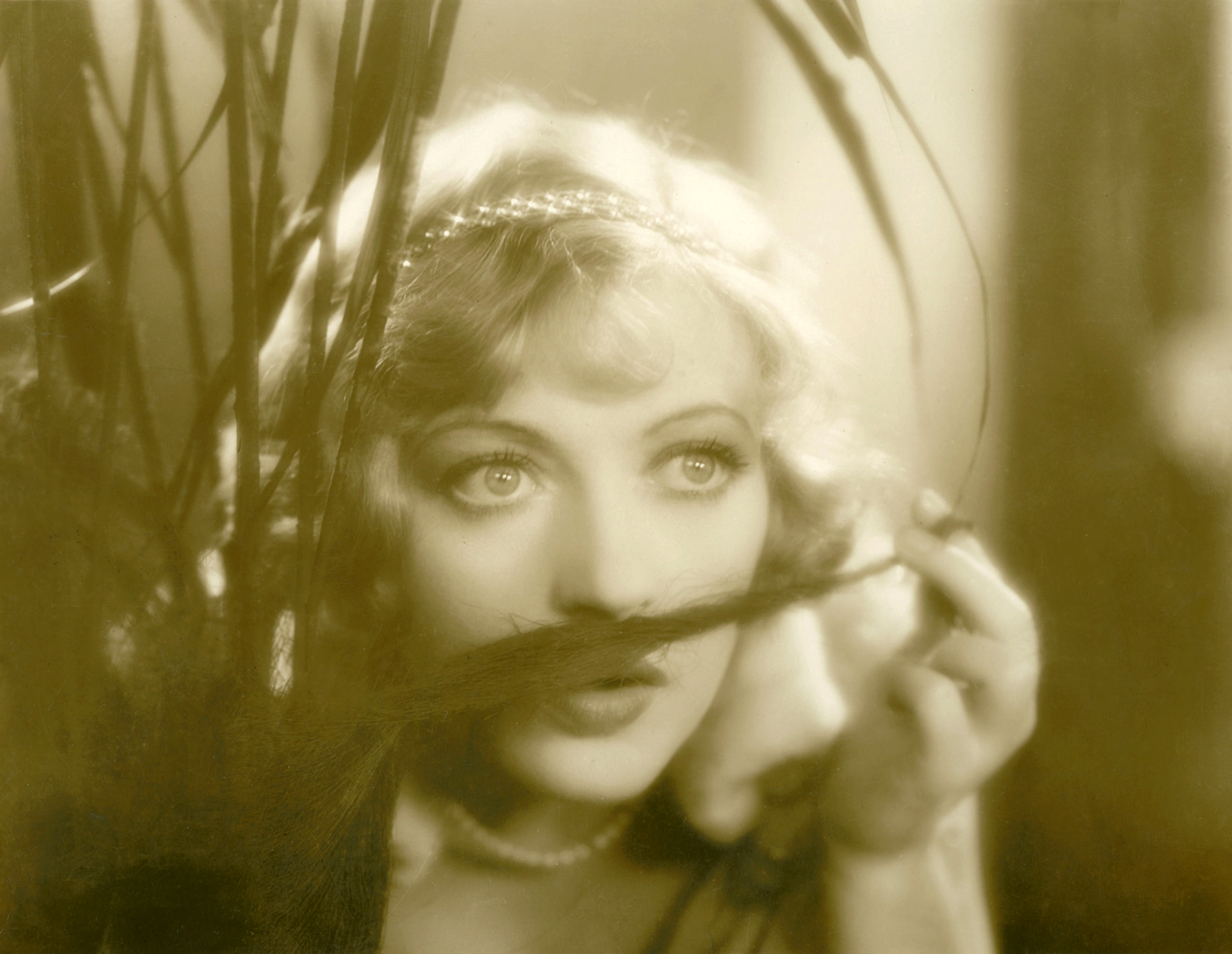
The BFI has also received a donation of silent films dating back to 1909 that were recovered from a recycling center in Devon. The collection contains one reel of The Cardboard Lover (Robert Leonard, 1928), starring Marion Davies, as well as a variety of feature films and shorts, including films from France, Italy, India, America, and the UK.
[Above: Marion Davies in The Cardboard Lover (Robert Leonard, 1928)]
MoMA Receives Landmark Works by August Sander, Tania Bruguera
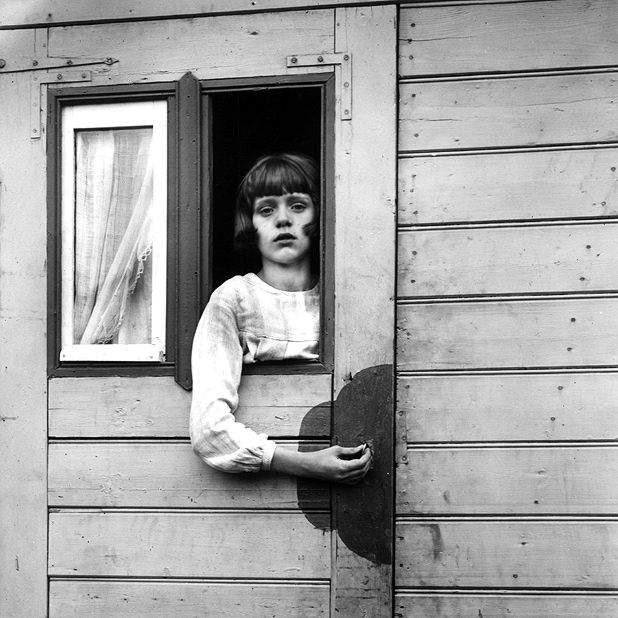
This summer, the Museum of Modern Art in New York City announced two major additions to its collection. The first acquisition is the complete set of August Sander’s People of the Twentieth Century (1892–1954), the artist’s comprehensive visual examination of German society that remains among the most ambitious undertakings in the history of photography. Produced over a sixty-year period, the 619 photographs are widely celebrated for embracing photography’s unique ability to capture detail, and its potential to evoke meaning through straightforward description. MoMA acquired the set through the Sander family, and is the only museum to hold the body of work in its entirety.
The second acquisition includes Tania Bruguera’s Untitled (Havana, 2000), a major performance and video installation that was conceived for and shown at the VII Bienal de La Habana in 2000. The work is the first in a series made by the artist and presented in cities around the world between 2000 and 2009, with each piece in the series featuring a different performance addressing the sociopolitical memory of the city in question. Untitled is a landmark of the artist’s early career, and the first work by Bruguera to enter MoMA’s collection. It was acquired through The Modern Women’s Fund Committee and the Committee on Media and Performance Art Fund.
[Above: August Sander, Girl in a Fairground Caravan (1926)]
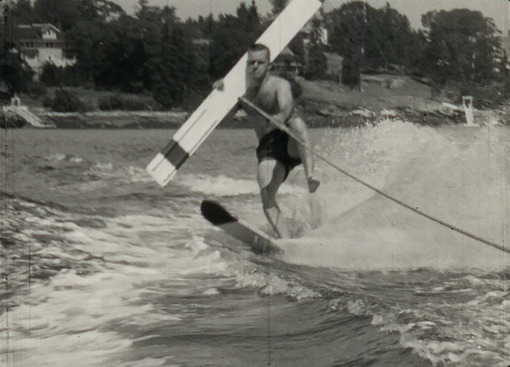
Yale University recently acquired the legendary collection of Herb Graff. The collection contains newsreels, educational shorts, interviews with public figures, industrial films, travelogues, and performances by well-known artists. The films reflect a broad range of American history and culture from the 1920s through the 1950s.
Graff devoted most of his life to collecting, preserving, and showing movies, especially early talkies of the 1930s. He was a cinephile whose calling card read simply “Film Resource.” Graff died on 15 January 2000, at the age of 74. Herb Graff’s son, Bennett Lovett-Graff, donated the collection to Yale’s Film Study Center Archive.
Laurel and Hardy “Battle of the Century” Pie Fight Recovered
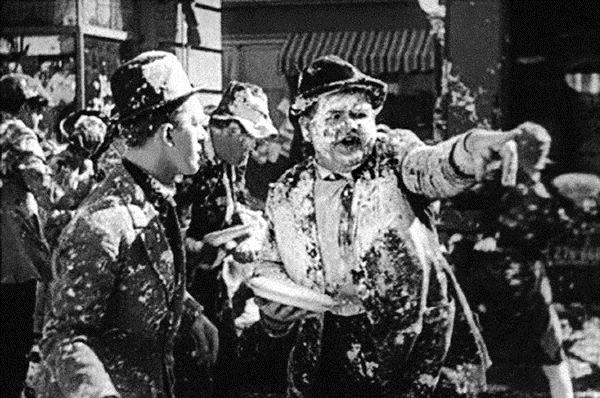
At the June meeting of the “Mostly Lost” film workshop at the Library of Congress, amateur film collector Jon Mirsalis announced that he had stumbled upon the missing second reel of Laurel and Hardy’s The Battle of the Century (Clyde Bruckman, 1927). For several decades, the twenty-minute, two-reel classic has been missing its second reel, which provided most of the logic for why dozens of people were pelting one another with pies.
“It’s been a holy grail of comedy,” the film historian Leonard Maltin said of the second reel. “And that’s not overstating the case.”
Plans are currently underway to restore the pie fight of the century. Further details on the discovery can be found here and here.
[Above: Laurel and Hardy in The Battle of the Century (Clyde Bruckman, 1927)]
Harvard Film Archive Restores First Irish-Language Film
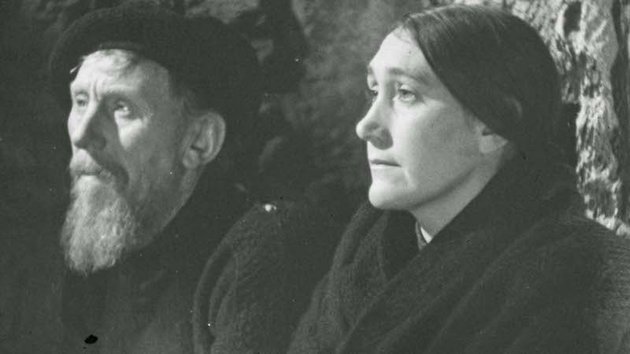
In 1934, Robert Flaherty brought the cast of his seminal documentary Man of Aran (1934) to London to record the film’s dialogue. He also made a second film while he was there, his first synch-sound production, Oidhche Sheanchais (1935). The film was commissioned by Ireland’s Department of Education. It was the first Irish-language talkie and Ireland’s first official state-sponsored film. The film features the assembled cast of Man of Aran, together with Seáinín Tom Ó Dioráin, a renowned Aran Island storyteller, who gather around a studio hearth for a night of story and song.
Oidhche Sheanchais disappeared soon after its release and was presumed lost until 2013, when a nitrate print was discovered in the Celtic Studies Department at Harvard University. The print was meticulously restored by the Harvard Film Archive and will be preserved in the Irish Film Institute Archive. The film had its premiere in July, alongside several other films from the IFI.
In 1993, the original negatives of Satyajit Ray’s The Apu Trilogy (1955–1959) were burned in a massive nitrate fire at a laboratory in London. The Academy Film Archive held on to the damaged film elements, even though there were no technologies available at the time to restore them. After nearly ten years of restoration work, the films have been painstakingly rescued by the Criterion Collection and the L’Immagine Ritrovata in Bologna, Italy.
The restored Apu Trilogy premiered at the Museum of Modern Art on 4 May 2015, almost exactly to the day Pather Pachali debuted there 60 years ago. The audience included Ray’s son, filmmaker Sandip Ray. “The film looked fabulous and we had a great time watching the film,” he said. “I was riveted and I cried again.” Ray added that his father would have loved to have seen his films back on the big screen. “He wanted his films to last and they've lasted.”
An interview with Lee Kline, the technical director at Criterion, about the restoration process is available here. Further details on the restoration can be found here and here.
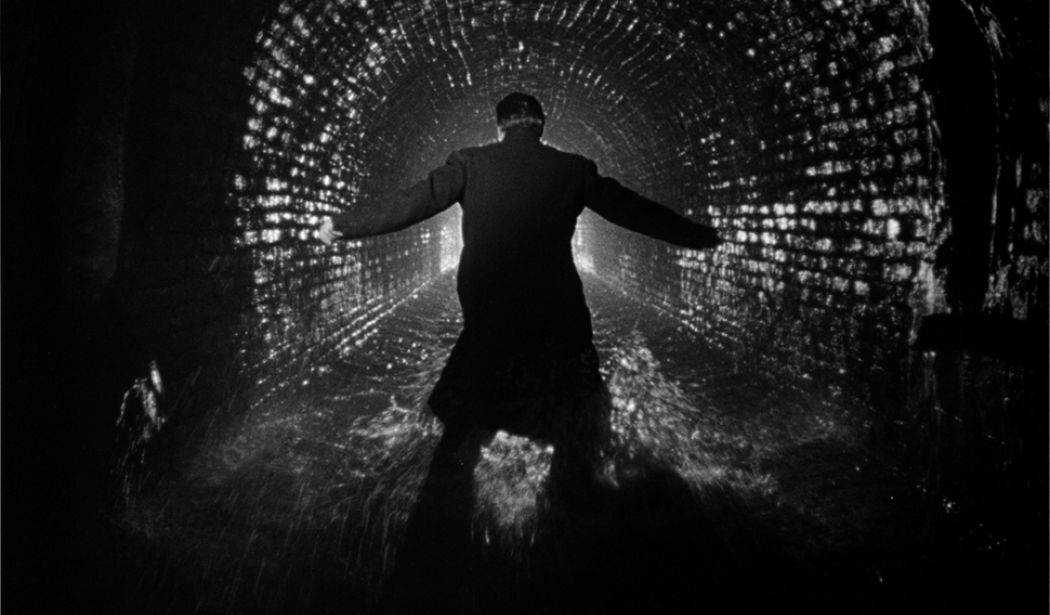
Sixty-six years after Carol Reed’s noir classic first debuted, The Third Man (1949) premiered again at the Cannes Film Festival, this time in a freshly restored print as part of the Cannes Classics program. The restoration was conducted by Studio Canal; the film will be released in New York on 26 June, in Los Angeles on 3 July, and tour elsewhere after that.
The re-release coincides with the centennial of Welles. His 100th was feted in Cannes with a number of screenings, including two newdocumentaries about him. A handful of producers and Welles’ daughter, Beatrice Welles, are also trying to raise two million dollars through crowdfunding to pay for the post-production on Welles’ final, unfinished film, The Other Side of the Wind.
More information on the restoration of the film can be found here, here, and here.
[Above: Still image from The Third Man (Carol Reed, 1949)]
“The company understands its responsibility and need to preserve our silent film legacy,” Ron Meyer, vice chairman at NBCUniversal, said in a statement. “This early art of filmmaking is the foundation on which Universal Pictures was built more than 100 years ago, and it’s important we honor our rich history.”
President of SAA Pens Open Letter to Register of Copyrights
In July, the President of the Society of American Archivists wrote an open letter to Maria Pallante, the Register of the U.S. Copyright Office. Roe concludes that, “…archival collections are brimming with rich stories and essential information that cannot find their readers because of the long duration of copyright. The failure of Congress to create a workable system for digitization effectively imprisons our shared cultural heritage.”
US Copyright Office Develops Mass Digitization Program, Seeks Comments
The U.S. Copyright Office recently announced the development of a pilot program and corresponding draft legislation that would establish a legal framework known as “extended collective licensing” for certain mass digitization activities that are currently beyond the reach of the Copyright Act. The Copyright Office will be accepting specific recommendations from interested parties; recommendations should address the operational aspects of the pilot program within the parameters and legal framework described in the Office’s Orphan Works and Mass Digitization report.
Further details on the notice of inquiry can be found here and here.
NFSA Supports Emerging Filmmakers with Footage, Audio
The National Film and Sound Archive of Australia (NFSA) has launched Take Three, an initiative to support Australian tertiary students and emerging filmmakers/artists by providing up to three minutes of footage/audio, and ten still images, free of license fees.
Eligible candidates will be able to use the footage/audio and stills in any artistic work, including film and documentaries; live productions such as dance, cabaret, theatre and opera; visual arts and public art works; music and sound productions; research; and lectures and presentations. Take Three will be an ongoing initiative.
NFSA CEO Michael Loebenstein said: “We can’t wait to see what Australia’s creative minds will be able to do with Take Three! We hope that tertiary students, emerging filmmakers, and artists will be inspired by the NFSA collection; that they’ll use all their creativity to give a new life to our archival content through their own work.”
Further details can be found here. Full terms and an application form are available here.
NFAI Re-launches Research Programmes, Restores 13 Tamil Titles
In June, the National Film Archive of India (NFAI) announced that it would be re-launching its research and educational outreach programs as well as updating its facilities. Many of its programs were discontinued seven years ago due to lack of funds and infrastructure.
NFAI director Prakash Magdum said that the archive plans to launch several initiatives, including travelling exhibitions, film appreciation courses in small towns and cities, and a new course for media journalists. Under the National Film Heritage Mission (NFHM), the film archive will also build new vaults and revamp its website so that they can upload films for online viewing. More information on these developments can be found here.
This summer, the NFAI also announced that it had completed restoration work on thirteen classics of Tamil cinema, aided by the Chennai-based AVM Cine Lab. The majority of the films from this collection are from the 1940s and 1950s; titles include Nandanar (A. Muthuswami Iyer, 1942), Mayavathi T.R. Sundaram, 1949), renowned for its dance sequences, and Nallathambi (N.S. Krishnan, 1949). Further details on the restoration process can be found here.
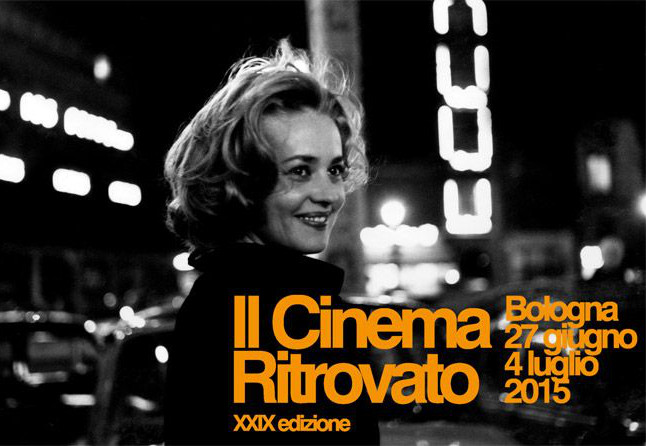
The 29th annual Cinema Ritrovato film festival was held from 26 June to 4 July in Bologna, Italy. The program was organized into multiple thematic strands, including (among others):
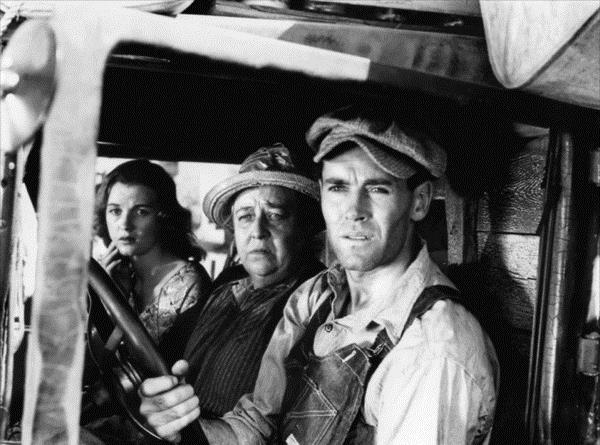
In July, the Museum of the Moving Image in New York launched a significant retrospective of John Ford cinema, entitled “The Essential John Ford.” The series includes canonical titles like Grapes of Wrath (1940), How Green Was My Valley (1941), and The Quiet Man (1952) as well as several lesser-known works. The earliest (and only silent) film included is Upstream (1927), a backstage comedy thought lost forever until it was discovered in the New Zealand Film Archive in 2009. The retrospective also includes Pilgrimage (1933), a film in which Henrietta Crosman has a spiritual awakening while on a memorial trip to the American cemetery in Argonne.
During his nearly fifty-year career, John Ford directed more than 150 films. Twenty of them were included in the retrospective and they were all screened on celluloid. The event concluded on 2 August. Further details can be found here. A review of the retrospective can be found here.
[Above: Still from Grapes of Wrath (John Ford, 1940)
As part of its ongoing “100 Must-See Hong Kong Films” series, the Hong Kong Film Archive (HKFA) will screen six classic films from August through October:
The films include The Story of Wong Fei-hung, Part One: Wong Fei-hung's Whip that Smacks the Candle (Wu Pang, 1949), The Story of Wong Fei-hung, Part Two: Wong Fei-hung Burns the Tyrant's Lair (Wu Pang, 1949), The Wall (Wong Hang, 1956), Laugh, Clown, Laugh (Li Pingqian, 1960), Chor Yuen's Intimate Confessions of a Chinese Courtesan (Chor Yuen, 1972) and Boat People (Anna Hui, 1982).
A complete schedule and further details can be found here.
This year’s events were held in late April and early May. They included a physical and virtual exhibition entitled “SOS! Save Our Stuff!” sponsored by the Library of Congress, workshops on taking care of personal collections, and a variety of preservation webinars.
The annual Northeast Historic Film (NHF) summer symposium, Wunderkino 5, took place July 24–26. For more than a decade, this event has brought together archivists, scholars, artists, and interested members of the public in an intimate setting for three days of viewing and discussing lesser-known, amateur, and found films. The program for this year’s event concentrated on the images of war and peace, both at home and abroad. Presentations explored, in particular, the contributions that amateur and non-theatrical films offer to our understanding the events of twentieth-century conflict.
Project_ARCC Hosts First Live “Tweet-Up” on #Preserveclimate
On 8 July 2015, Project_ARCC (Archivists Responding to Climate Change) hosted its first live tweet-up to discuss archiving and climate change. Archivists and concerned community members came together to discuss the personal and professional effects of climate change. Several questions guided the discussion, including: As archivists, what is our role in the movement to fight climate change? How is climate change affecting our profession, and how can we act as agents for action within our communities? What actions will have an impact?
Project_ARCC was founded on Earth Day, 2015. It is a task force of archivists striving to motivate the archival profession to respond to climate change. The group seeks to achieve a four-fold mission:
Protect archival collections from the impact of climate change
Reducethe profession’s carbon and ecological footprint
Elevate climate change related archival collections to improve public awareness and understanding of climate change
Preserve this epochal moment in history for future research and understanding
Learn more here. The event has been archived at Storify.
Internet Archive Receives Two Grants for Web Archiving Projects
The Internet Archive will be participating in two grant-funded web archiving projects. The first project, entitled “Archiving the Websites of Contemporary Composers,” will involve a partnership between the Internet Archive’s Archive-It service and the NYU Libraries. The project will archive web-based and born-digital audiovisual materials, and research and develop tools for their improved capture and discoverability. The project will be funded by a grant of $480,000 from The Andrew W. Mellon Foundation.
In July, the British Film Institute (BFI) launched Britain on Film, an archive-based initiative through which thousands of unseen films have been digitized and will be made available for free to the public on the BFI Player platform. By 2017, the BFI hopes to have digitized 10,000 film and TV titles from 1895 to the present day, backed by National Lottery funding and the support of the Esmée Fairbairn Foundation.
The collection includes The Passmore Family Collection, the world’s earliest home movies from 1902, as well as travelogues, tourism films, public information docs, newsreels, a few feature films and a host of other material. What unites all of the footage—taken from the BFI National Archive and more than a dozen other archives across the country—is that most of it has remained largely unseen since it was first filmed.
A “film map” of Britain has also been created to help viewers discover films relating to their own region. Further details are available here and here; the BFI player is available here.
[Above: Pitlochry Welcomes You (2015), Britain on Film, BFI]
AP, British Movietone Upload Thousands of Films to YouTube
Associated Press, in company with British Movietone, has released a million minutes of historic world news onto two YouTube channels. The collection of more than 550,000 digitized video stories dates from 1895 to the present day and constitutes one of the largest uploads of historical news content on the video-sharing platform.
The collection includes footage of the San Francisco earthquake in 1906, the bombing of Pearl Harbor in 1941, Benito Mussolini calling for world peace in 1931, and London honouring the German’s ambassador with a Nazi salute in 1936. The content also includes celebrity footage, sporting events, entertainment, extreme weather, technological innovations, and curious historical moments: elephants sprinting through Chicago in a 1935 race; Dutch naturists exercising in public in 2007; and the unveiling in 2011 of a chocolate-themed version of the Mercedes Smart car.
More information can be found here. The Youtube channels for the collection can be found here and here.
In June, Google announced that it had paired with four partners to create Aflam, an Arabic cinema channel. Aflam does not host a film library of titles, but rather offers a selection of curated playlists; when a user selects a film s/he is redirected to the original channel or partner that has already uploaded the film.
According to Najeeb Jarrar, consumer marketing manager at Google, one aim of the project is to drive traffic to partner channels. “Aflam is more of a spring point,” he explained. “You come to it and it actually pushes you to our partner, so [another] aim is that users get introduced to high quality movies.
Many of the films that users can find through Aflam are from the “golden age” of Arab cinema, a period that stretches from the 1940s through the 1960s. “We’ve seen a lot of excitement from normal users as well as from artists, performers, people within the movie industry,” Jarrar said, adding that the channel not only brought this content to users but also highlighted “the archive of Arabic movies.”
Aflam now links to more than 1,000 films that are categorized by date of release, actors, and directors. Further information can be found here.
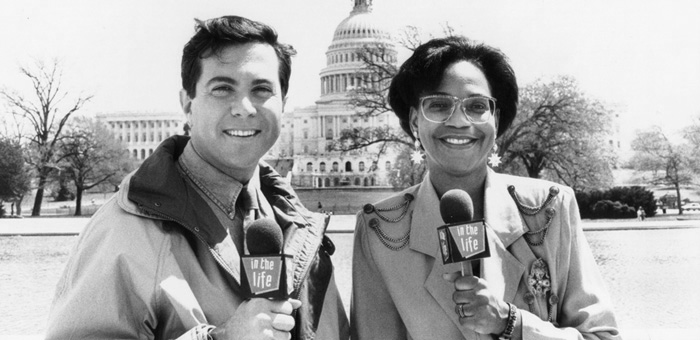
A wealth of videos and other resources are now publicly accessible online as part of a new lesbian, gay, bisexual, and transgender moving image research area featuring episodes of the Emmy-nominated LGBT public television series In the Life. In addition to episodes from the TV program, the portal also features other contextualizing material, including a commissioned essay, “The Time of Our Lives: In the Life—America’s LGBT News Magazine,” by Stephen Tropiano; an oral history with seminal indie filmmaker Pat Rocco; a lecture by LGBT scholar Lillian Faderman; and a list of LGBT media, history and advocacy resources.
The portal’s launch, which is part of the UCLA Film & Television Archive’s 50th anniversary celebration, builds on its previous efforts with the non-profit Outfest through the Outfest UCLA Legacy Project. The Legacy Project, founded in 2005, works to preserve both the history and the future of LGBT moving image materials by convening symposia, educating filmmakers about proper stewardship of their work, restoring materials that are at risk and encouraging the use of collection materials, which now number more than 35,000 titles.
Created by John Scagliotti in 1992, In the Life began as a variety-type show, but quickly evolved into a news magazine format; it became an award-winning and respected source for LGBT journalism at a time when lesbian, gay, bisexual and transgender people were often invisible in media. In the Life ran in more than 200 markets around the United States; its final episode aired in December 2012.
The Archive has fifteen seasons of the show available online now. All twenty-one seasons—along with outtakes, interviews, and other significant video content—will be available this fall. Further details are available here.
[Above: Still from In the Life; UCLA Film & Television Archive]
"Archival News” reports recent news highlights from the media archive community for the Cinema Journal readership. Some information in this column comes courtesy of the Association of Moving Image Archivists (AMIA) listserv, along with institutional newsletters, websites, and press releases. This column is updated quarterly. Contributions to this column are welcomed. Information should be sent to Katherine Groo, Lecturer, Film and Visual Culture, School of Language and Literature, University of Aberdeen, Taylor Bldg. A, Aberdeen AB24 3UB, Scotland; phone +44 (0)1224-701590; email: [email protected].